
I. Introduction: Why Revisit FLOKI in 2026?
Many newcomers’ first reaction to FLOKI is usually: “Isn’t this just another dog-themed meme coin?”
That judgment isn’t entirely wrong, because FLOKI did originate from meme culture, and it is indeed linked to Elon Musk naming his Shiba Inu dog “Floki.” According to Floki’s official timeline, on June 25, 2021, Elon Musk tweeted that his Shiba Inu would be named Floki, and the FLOKI token was born shortly after.
But if you still only understand FLOKI through the “dog coin concept” in 2026, you will miss the story it is actually trying to tell today.
As of July 2026, Floki’s official positioning no longer wraps itself solely as a meme token. Instead, it emphasizes three pillars: Community, Utility, and Charity. In its official description, Floki aims to become “one of the most well-known and widely used cryptocurrencies globally,” building its brand through community spread, on-chain applications, and charitable projects.
That is precisely why we are revisiting FLOKI today: it has gradually expanded from a token driven by meme sentiment to an ecosystem covering Valhalla gaming, FlokiFi, TokenFi, staking, Trading Bot, Name Service, and more. The question is no longer “was FLOKI ever popular?” but rather:
Has FLOKI transitioned from a meme coin into an ecosystem token?
This article will focus on three key questions:
First, what exactly is FLOKI, and how is it different from DOGE and SHIB?
Second, is FLOKI still worth attention in 2026, and what are its upside drivers and risks?
Third, if a crypto newcomer wants to buy FLOKI on Hibt, how should they operate, manage position sizing, and avoid buying the wrong token, depositing on the wrong chain, or FOMO-buying at highs?
Please note: this article is written in early July 2026. FLOKI’s price, market cap, trading volume, ranking, and liquidity change in real time. Before publishing, it is recommended to recheck CoinGecko, CoinMarketCap, Floki’s official website, block explorers, and Hibt’s live trading pages. This article does not constitute investment advice; it only provides information compilation and risk analysis.
II. What Is FLOKI? Vaporware or a Real Ecosystem?
FLOKI is the core token of the Floki ecosystem. Its earliest momentum came from meme culture, but the project team has since clearly tried to upgrade it from a “pure dog coin concept” into a community-driven crypto ecosystem brand.
From a classification standpoint, FLOKI is hard to pin down with a single label.
It is a meme coin, because its origin, brand recognition, and community growth model are inseparable from meme culture.
It is also a GameFi-related token, because Valhalla is positioned by the official team as Floki’s Play-to-Earn NFT metaverse, featuring on-chain interactions, upgradeable NFTs, and an in-game economy.
It also has DeFi tool attributes, because FlokiFi Locker provides asset-locking services for LP tokens, ERC-20 tokens, NFTs, ERC-1155 assets, and supports multiple EVM-compatible chains.
It is also linked to the RWA, token issuance, and tokenization narratives, because TokenFi is described by the official team as an all-in-one tokenization platform.
So, a more accurate understanding is: FLOKI is an ecosystem meme token launched by meme culture, spread by the community, and then attempting to capture value through GameFi, DeFi, TokenFi, and utility products.
1. Valhalla: The Core Gaming Narrative of Floki
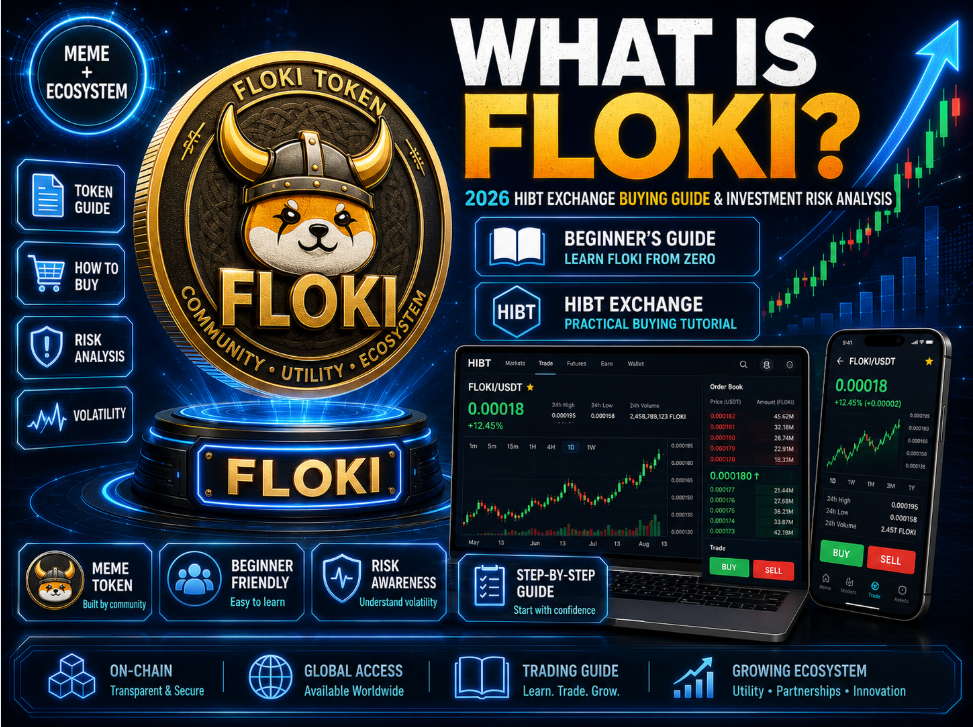
Valhalla is one of the most important products in the Floki ecosystem. The official team describes it as a Play-to-Earn NFT metaverse, featuring on-chain game interactions, upgradeable NFTs, and an in-game economy system.
CoinDesk reported in July 2025 that Valhalla officially launched on mainnet on June 30, 2025, running on opBNB. It is a blockchain-based game set in a Norse mythology background. Players can control NFT characters called Veras, participating in turn-based combat, exploration, and quests.
What this means for FLOKI is that it is no longer just a “price goes up and down” story; it is beginning to try to create token demand through gaming scenarios. However, whether the game truly holds value depends on real player numbers, retention rates, on-chain interactions, revenue, and in-game asset liquidity—not just the words “mainnet launch.”
2. FlokiFi: An Asset-Locking Tool Serving Projects
FlokiFi Locker is a DeFi product under the Floki brand. It supports locking LP tokens, regular tokens, NFTs, and multi-token assets, emphasizing that asset locking can help project teams improve transparency.
For newcomers, you can think of it as a “project-side asset-locking tool.” If a new project locks its LP liquidity or team tokens, it can at least partially reduce the trust risks of short-term pool removal and arbitrary dumping. Of course, this doesn’t mean the project is necessarily safe or won’t crash; it just means on-chain transparency is higher than with no locking at all.
FlokiFi’s official disclosures also state that its Locker supports 15 EVM-compatible chains, including Ethereum, BSC, Base, Arbitrum, Polygon, Avalanche, and opBNB, and claims that its contracts have been audited and monitored by CertiK.
3. TokenFi: FLOKI Ecosystem Extending into Tokenization
TokenFi is the tokenization platform within the Floki ecosystem. The official team describes it as an all-in-one tokenization platform.
TokenFi’s impact on FLOKI is mainly reflected in two aspects:
First, it allows Floki to rely on more than just meme sentiment; it attempts to carve out a larger market narrative around token issuance, asset tokenization, and tool services.
Second, FLOKI staking is linked to TOKEN rewards. Floki’s official website shows that users can stake FLOKI and receive Floki’s sister/reward token, TOKEN.
But it is important to stay rational here: TokenFi is a narrative bonus, not a guarantee that FLOKI will rise. Whether it can truly support valuation depends on actual platform usage, project-side demand, fee revenue, and the value capture mechanism between TOKEN and FLOKI.
4. Trading Bot, Name Service, and Other Ecosystem Modules
Floki’s official page also reveals Floki Trading Bot and Floki Name Service.
Floki Trading Bot is a Telegram trading bot that allows users to manage hot wallets and trade through a Telegram chat interface.
Floki Name Service is a decentralized domain name service where users can create .floki domains.
The significance of these products lies in expanding FLOKI’s use cases. But from an investment perspective, newcomers should not assume that FLOKI is low-risk just because it has “many ecosystem modules.” The real key is whether these products are being used, whether they generate revenue, whether they create token demand, and whether they can sustain community attention.
5. How Is FLOKI Different from DOGE and SHIB?
DOGE is more like the grandfather of meme assets; its strengths are brand history, community recognition, and high liquidity, but ecosystem applications are not its core selling point.
SHIB later also expanded into Shibarium, DEX, NFT, metaverse, and other ecosystem directions, with a path somewhat similar to FLOKI’s.
FLOKI’s difference is that it positioned itself relatively early as a “community + utility + charity” combination, and used Valhalla, FlokiFi, TokenFi, and other products as the backbone of its ecosystem narrative.
But be careful: holding FLOKI does not equal holding equity in the Floki project. FLOKI is not a stock, nor does it represent company shares, profit dividends, or legal ownership. Its price depends more on market demand, community sentiment, trading liquidity, ecosystem execution, and overall crypto market risk appetite.
III. FLOKI Tokenomics: How to Check Supply, Contract Addresses, and Security?
Two things scare newcomers most when buying FLOKI.
First, buying a fake FLOKI.
Second, looking only at the low price without knowing the total supply is massive, leading to misjudging valuation.
Floki’s official website states that FLOKI is a multi-chain token running on Ethereum and BNB Smart Chain, and discloses two main contract addresses: the ETH contract address is 0xcf0c122c6b73ff809c693db761e7baebe62b6a2e, and the BSC contract address is 0xfb5b838b6cfeedc2873ab27866079ac55363d37e.
The official team also discloses that FLOKI’s total supply is 10,000,000,000,000 (10 trillion); the DEX buy/sell tax is 0.3%; 25% of FlokiFi Locker fees are burned, and 1% of Floki prepaid card fees are burned.
CoinMarketCap also shows that FLOKI’s total supply is 10 trillion, and explains that FLOKI operates simultaneously as an ERC-20 token on Ethereum and a BEP-20 token on BNB Smart Chain.
How Should Newcomers Verify the Real Token?
Don’t trust community screenshots alone. Don’t trust links sent by others. And don’t casually copy contract addresses from Telegram or Twitter/X DMs.
A more reliable verification path is:
Open the Floki official website first, and find the officially disclosed ETH and BSC contract addresses.
Then open CoinGecko or CoinMarketCap’s FLOKI page, and confirm whether the contract addresses match.
Next, search the corresponding contract on Etherscan or BscScan to see if it is a verified contract, check holder numbers, transaction records, and token name.
Finally, return to Hibt and confirm you are trading the FLOKI/USDT spot pair, not a similarly named copycat token.
This step is extremely important, because the meme coin space is full of copycats. Academic research has analyzed the large token ecosystems on Ethereum and BNB Smart Chain, finding many short-lifecycle tokens, anomalous deployment addresses, and rug pull behaviors, with one-day rug pulls on BNB Smart Chain especially worthy of caution.
Audits should also not be understood as “absolute safety.” Floki’s official disclosures mention CertiK, Solidity Finance, and other audit information. CoinGecko’s page also shows FLOKI’s security score and audit links. But audits only reduce some smart contract risks; they cannot eliminate market crashes, liquidity drying up, team underperformance, ecosystem product failures, and other risks.
IV. FLOKI’s Current Market Performance: Low Price—Opportunity or Risk?
Many newcomers see FLOKI’s unit price with many decimal places and think, “It’s so cheap; even a small rise means huge gains.”
This is a classic misconception.
A low token price does not mean low valuation. What really matters is not the price per token, but market cap, fully diluted valuation (FDV), circulating supply, trading volume, drawdown from all-time highs, and market depth.
As of July 7, 2026, CoinGecko shows FLOKI’s price at approximately $0.000023, 24-hour trading volume around $16.99 million, circulating supply around 9.7 trillion, market cap around $223 million, and ranking around #146 on CoinGecko.
CoinGecko also shows FLOKI’s all-time high was approximately $0.0003449, with the current price down over 90% from that peak; FDV is around $231 million, assuming maximum supply of 10 trillion is fully circulating.
What does this tell us?
First, although FLOKI’s unit price is very low, its market cap is not a “few million dollar micro-cap.” It is already a meme ecosystem asset of some size.
Second, FLOKI’s severe drawdown from all-time highs does not necessarily mean the project has failed; it may also reflect the meme sector cycle, liquidity retreat, and declining risk appetite. But a drawdown of over 90% also shows that its volatility is far higher than mainstream assets like BTC and ETH.
Third, trading volume is a metric newcomers must watch. Higher daily trading volume usually means easier entry and exit; when daily trading volume is too low, large market orders can cause significant slippage. Even when buying on a centralized exchange, look at the order book depth, not just the candlestick chart.
Therefore, judging whether FLOKI is worth attention should not be based on asking “is the price cheap?” but rather:
Does the market cap still have room to grow?
Is there any new ecosystem progress?
Does Valhalla have real players?
Are FlokiFi and TokenFi generating actual usage demand?
Is community heat sustained?
Do trading volume and order book depth support normal buying and selling?
Is the broader market in a risk-appetite recovery phase?
These questions matter more than “can it still do a 10x?”
V. Core Ecosystem Highlights: Are Valhalla, FlokiFi, and TokenFi Actually Useful?
FLOKI’s biggest highlight is its attempt to convert meme sentiment into a product ecosystem.
But whether an ecosystem has value cannot be judged by how many modules are listed on the website. More importantly, you need to evaluate each one: has it launched? Does it have users? Does it generate fees? Can it create demand or burn for FLOKI? Can it sustain the narrative?
1. Valhalla: Already Live, but Real Player Growth Still Needs Verification
Valhalla is no longer just a concept in a white paper. CoinDesk reported that Valhalla officially launched on mainnet on June 30, 2025, running on opBNB. It adopts a browser-based, turn-based, tactical MMORPG model, combining NFT characters, quests, exploration, and on-chain rewards.
This is positive for FLOKI, because GameFi scenarios can theoretically create token usage demand. But the problem is that GameFi projects have historically faced three challenges:
Are players here for the game, or for the mining yield?
Can the game lifecycle outlast the short-term subsidy period?
When token prices fall, are players still willing to participate?
So, the key for Valhalla is not just “launch,” but whether it can subsequently bring real active users, in-game spending, NFT trading, and community content creation.
2. FlokiFi Locker: Has Real Utility, but Mainly Serves Projects
FlokiFi Locker’s value is relatively clear: it helps project teams lock LP, regular tokens, NFTs, and multi-token assets, increasing transparency through lock records. The official page shows it supports ERC-20, ERC-1155, NFT, LP asset locking, and covers 15 EVM-compatible chains.
The advantage of such products is that they have clear utility attributes and are not entirely dependent on meme sentiment.
But its problem is also obvious: its main users are not retail investors, but project teams. Ordinary FLOKI holders need to further observe FlokiFi’s real lock-up scale, fee revenue, burn mechanism execution, and whether this revenue actually feeds back into FLOKI’s value.
3. TokenFi: Large Narrative Space, but Needs Data Validation
TokenFi’s narrative is bigger, because tokenization, RWA, and asset issuance tools are key keywords in the crypto industry during 2025–2026. Floki officially positions TokenFi as an all-in-one tokenization platform.
If TokenFi can attract project teams to use it, the FLOKI ecosystem will no longer be just meme + GameFi; it will have the opportunity to extend into token issuance infrastructure.
But newcomers should not equate “large narrative space” with “high investment certainty.” TokenFi needs to prove itself with real project numbers, transaction volume, revenue, platform retention, and ecosystem partnerships—not just concept-driven price moves.
4. Trading Bot, Name Service, Prepaid Cards: Ecosystem Supplements, Not Valuation Cores
Floki Trading Bot, Floki Name Service, and prepaid card features help raise brand exposure and use cases. The official page shows that Floki Trading Bot can manage hot wallets via Telegram, and Name Service supports creating .floki decentralized domains.
But from an investment perspective, these are more like ecosystem supplementary modules. They can enhance the completeness of the story, but may not individually support FLOKI’s long-term valuation. The real focus should still be on user count, revenue, burns, retention, and trading demand.
VI. Is FLOKI Still Worth Attention?
Whether FLOKI is worth attention depends on what kind of asset you treat it as.
If you treat it as a long-term core asset like BTC or ETH, FLOKI’s risk is clearly too high.
If you treat it as a micro-cap meme coin with zero ecosystem, FLOKI is not exactly that either, because it already has Valhalla, FlokiFi, TokenFi, staking, Trading Bot, and other ecosystem modules.
A more reasonable positioning is: FLOKI is a high-volatility, high-community-attribute meme ecosystem asset with some ecosystem execution attempts.
FLOKI’s Upside Logic
First, the meme sector warms up again. Whenever market risk appetite recovers, meme coins often see sharper short-term bursts than mainstream coins.
Second, Valhalla user growth. If Valhalla can prove it has real players and sustained content in 2026, FLOKI’s GameFi narrative will have stronger support.
Third, TokenFi expanding the tokenization narrative. If TokenFi can gain real usage in RWA, project token issuance, and tokenization tools, FLOKI will gain a larger ecosystem imagination space.
Fourth, staking and TOKEN rewards enhancing holding motivation. Floki’s official info shows that users can stake FLOKI and receive TOKEN rewards.
Fifth, improved exchange liquidity. If more centralized exchanges provide good depth, FLOKI’s trading experience will be better than pure on-chain micro-caps.
Sixth, continued community marketing heat. Floki’s official team emphasizes that the community is the project’s core, and displays community entry points and follower data across multiple social platforms.
FLOKI’s Downside Risks
First, declining meme heat. The biggest risk of meme coins is that sentiment comes fast and leaves fast.
Second, Valhalla player growth falling short of expectations. If user retention is poor after the game’s launch, the GameFi narrative will be weakened.
Third, insufficient TokenFi usage. If TokenFi cannot generate real project-side demand, the tokenization narrative may become short-term marketing.
Fourth, declining overall market risk appetite. If BTC and ETH enter a downtrend, high-volatility assets like FLOKI usually suffer larger drawdowns.
Fifth, whale or early holder dumping. Meme assets are more sensitive to large-holder behavior.
Sixth, competition from similar meme coins. DOGE, SHIB, PEPE, BONK, WIF, and newly emerging hot memes will all divert capital and attention.
If readers want to understand the high volatility and liquidity risks of small-cap meme coins, you can compare and read the MANLET In-Depth Guide. MANLET leans more toward small-cap meme speculation, while FLOKI has already developed more complex ecosystem narratives like Valhalla, FlokiFi, and TokenFi.
If readers want to understand the long-term logic of governance and public-chain assets, you can refer to the Core DAO In-Depth Guide. Core DAO’s core value comes from public-chain consensus, BTCfi, and ecosystem governance, while FLOKI’s value depends more on community spread, meme culture, and scenario transformation.
These two comparisons can help newcomers understand: different tokens have completely different investment logics, and you cannot judge all coins with the same standard.
VII. How to Buy FLOKI on Hibt?
For newcomers, the most important thing when buying FLOKI is not speed, but safety.
In Hibt’s FLOKI-related pages, the platform already displays a basic buying path: enter the FLOKI/USDT spot trading page, enter the order unit and quantity, then click buy or sell.
But in actual operation, the following workflow is recommended.
Step 1: Register and Complete Account Security Settings
Before registering on Hibt, it is recommended to prepare your commonly used email, mobile verification code tools, identity verification documents, and Google Authenticator or other 2FA tools.
I personally recommend newcomers complete KYC and account security settings before depositing. The reason is simple: if you deposit first, and then run into issues with security verification, identity verification, or abnormal devices affecting withdrawals or trading, it will be more troublesome to resolve.
Especially for first-time exchange users, don’t rush to buy coins. First confirm whether the official website is correct, whether 2FA is bound, whether the login device is secure, and whether email security protection is enabled.
Step 2: Deposit USDT
Most newcomers buying FLOKI will first deposit USDT, then buy in the FLOKI/USDT pair.
When depositing USDT, pay special attention to network selection. Common networks include TRC-20, BEP-20, ERC-20, etc. Different networks have different address formats, fees, and arrival speeds.
The most common mistake is: selecting TRC-20 for withdrawal on one platform, but choosing a BEP-20 deposit address on another; or not checking the network when copying the address. If the network is wrong, assets may not be automatically recoverable, and may even be permanently lost.
I generally don’t deposit large amounts on the first try. Instead, I first test with 10–20 USDT to confirm arrival and order flow. Once the network, address, and trading pair are all confirmed correct, proceed with subsequent operations.
Step 3: Search for the FLOKI/USDT Spot Trading Pair
After entering Hibt’s spot page, search for FLOKI and confirm the trading pair is FLOKI/USDT.
Here, don’t just look at the coin name; also confirm the page source is Hibt’s official site, and do not log in through community DM links, unfamiliar ad links, or phishing URLs.
Step 4: Choose Limit Order or Market Order
For first-time FLOKI purchases, I recommend newcomers prioritize limit orders.
Market orders have the advantage of fast execution, but the downside is that when order book depth is insufficient or volatility is high, the executed price may significantly deviate from your expectation. For high-volatility assets like FLOKI, prices can change quickly in short periods, and FOMO buying especially easily leads to buying at short-term highs.
Limit orders may not execute immediately, but you can set a price you are willing to accept in advance, making them more suitable for newcomers to control risk.
Step 5: Check Asset Balance and Order History
After buying, you can check your FLOKI balance on Hibt’s assets page. If some assets are shown as frozen, it is usually because a limit order has not been fully filled, and funds or tokens are occupied by the pending order.
It is also recommended to check historical orders and trade records to confirm the executed price, filled quantity, fees, and remaining balance.
Step 6: Should You Withdraw to a Wallet?
If you are just holding a small position for learning, keeping it in the exchange spot account is simpler.
If you want to withdraw to MetaMask or another wallet, you must confirm the withdrawal network, wallet address, and supported chains. FLOKI has two main contracts on Ethereum and BNB Smart Chain. Newcomers must never confuse the “contract address” with the “withdrawal address.”
The contract address is the token’s identity identifier, not your wallet receiving address. Your receiving address should come from your own wallet or the exchange’s deposit page.
VIII. Risks You Must Know Before Buying FLOKI
Having an ecosystem does not mean there is no risk of going to zero.
This sentence is very important.
Many newcomers mistakenly assume that as long as a project has a website, a game, an audit, and a community, it won’t crash. But the crypto market does not work that way. Especially for meme assets, prices are often influenced by market sentiment, social media heat, exchange liquidity, and whale behavior, with volatility significantly higher than BTC and ETH.
1. Extreme Volatility of Meme Assets
FLOKI still belongs to a highly meme-driven asset. Even though it has Valhalla, FlokiFi, and TokenFi, this cannot change the fact that it heavily depends on community heat and market risk appetite.
When market sentiment is good, FLOKI may rise faster than mainstream coins; when market sentiment is bad, it may also fall faster.
2. Ecosystem Products Do Not Equal Long-Term Success
Valhalla’s launch is good news, but a game launch does not equal game success. The real difficulty for GameFi projects lies in user retention, game balance, economic model, sustained content updates, and player community.
FlokiFi has utility attributes, but real lock-up scale and fee revenue still need to be observed.
TokenFi has a tokenization narrative, but whether it attracts real project-side usage remains to be seen.
3. DEX Buy/Sell Tax and On-Chain Costs
Floki’s official disclosure states that FLOKI has a 0.3% buy/sell tax on DEX. If newcomers choose to trade on-chain, they also need to consider gas fees, slippage, approval risks, fake pools, and phishing sites.
By comparison, buying FLOKI on centralized exchanges like Hibt is simpler, but you still need to pay attention to trading fees, order book depth, platform account security, and withdrawal networks.
4. Fake FLOKI and Copycat Risks
Popular meme coins almost always spawn copycats. Similar names, similar logos, and even contracts that look very real do not mean they are the real token.
The correct approach is: official website → CoinGecko → CoinMarketCap → Etherscan/BscScan → Hibt trading page, cross-verifying from multiple sources.
5. Common Mistakes in Hibt Operations
Common mistakes newcomers make when buying FLOKI on Hibt include:
Depositing USDT to the wrong network.
Using the FLOKI contract address as the withdrawal address.
Accidentally entering a fake Hibt website.
Logging in through community DM links.
Not setting up 2FA.
Chasing highs with market orders without checking order book depth.
Not recording their own buying rationale and take-profit/stop-loss plans after purchase.
If you encounter account abnormalities, deposit not arriving, withdrawal delays, or other issues, do not trust people in communities claiming to be customer service. The correct way is to handle it through Hibt’s official help center, in-site ticket system, or official announcement channels.
IX. How Should Newcomers Formulate a FLOKI Investment Strategy?
A strategy truly suitable for newcomers is not predicting how many times FLOKI will rise, but first controlling how much you can lose in the worst-case scenario.
1. Position Sizing: Small Position for Observation, No Heavy All-In
If you are a newcomer making your first FLOKI allocation, it is recommended to control it within 3%–5% of your total crypto assets.
Even if you have some experience, it is not recommended to raise FLOKI’s position above 10%. It can serve as a high-volatility allocation, but is not suitable as the sole core asset.
More importantly, do not use living expenses, borrowed money, credit card funds, or emergency funds to buy meme coins.
2. Buy in Batches, Not All at Once
A more prudent approach is a three-step build:
The first batch is an observation position. A smaller amount, with the goal not being to make big money, but to familiarize yourself with Hibt’s order process, FLOKI’s volatility rhythm, and your own psychological tolerance.
The second batch waits for a pullback confirmation. If FLOKI surges short-term without obvious positive catalysts, don’t rush to chase. You can wait for a pullback to key support levels, or wait for market sentiment to stabilize before deciding.
The third batch waits for ecosystem or price structure improvement. For example, after Valhalla data improves, TokenFi has new progress, trading volume significantly increases, or the price breaks through long-term resistance, then consider whether to increase the position.
3. Is FLOKI Suitable for Dollar-Cost Averaging (DCA)?
FLOKI is not as suitable for long-term DCA for most people as BTC and ETH are. Its volatility is greater, narrative shifts faster, and cyclicality is stronger.
If you really want to DCA FLOKI, it is more suitable with a “small amount, fixed interval, loss-tolerable” approach, rather than treating it as a retirement plan.
The prerequisite for DCA-ing FLOKI is: you recognize its ecosystem direction, and are willing to endure long periods of sideways movement, deep drawdowns, or even the risk of narrative failure.
4. How to Set Take-Profit?
The biggest problem for many newcomers buying meme coins is not not knowing how to buy, but not knowing how to sell.
A simple take-profit framework is:
After a 50% rise, sell 1/3 to recover some principal.
After a 100% rise, sell another 1/3 to reduce risk.
Leave the remaining 1/3 as a profit position, observing whether there is a larger move.
This method may not maximize returns, but it can prevent you from not selling at all when you have high paper profits, and then riding them all the way back down.
5. What to Do If You’re Stuck?
If you’re stuck after buying, don’t reflexively average down.
First, ask yourself three questions:
Is the overall market falling in sync? If BTC, ETH, and the entire meme sector are falling, FLOKI may just be following the market.
Has there been bad news in the FLOKI ecosystem? For example, poor game data, contract risks, declining exchange liquidity, or community controversies.
Is your original buying logic still valid? If you bought because of Valhalla, TokenFi, and community heat, but these logics have been weakened, you cannot simply comfort yourself with “it’s cheaper now.”
Averaging down is only appropriate when you still believe in the original logic, your total position is still controllable, and the broader market is not in a systemic collapse.
X. FAQ: Most Common Questions from Newcomers About FLOKI
1. Is FLOKI a Meme Coin or a GameFi Coin?
FLOKI is first and foremost a meme coin, but it has already expanded into GameFi, DeFi, TokenFi, staking, Trading Bot, and other ecosystem modules. More accurately, it is a meme asset with ecosystem expansion.
2. What Is the Difference Between FLOKI, SHIB, and DOGE?
DOGE leans more toward native meme and payment culture; SHIB is also doing ecosystem expansion; FLOKI’s difference is emphasizing Community, Utility, and Charity, and using Valhalla, FlokiFi, and TokenFi as the core of its ecosystem.
3. What Is the Relationship Between FLOKI and TokenFi?
TokenFi is the tokenization platform within the Floki ecosystem, described by the official team as an all-in-one tokenization platform. FLOKI stakers can receive TOKEN rewards, but FLOKI and TOKEN are different tokens.
4. Can FLOKI Be Staked?
Yes. Floki’s official info shows that users can stake FLOKI and receive TOKEN rewards. But before staking, understand the lock-up period, yield source, contract risks, and opportunity cost.
5. Does FLOKI Have Its Own Game?
Yes. Valhalla is Floki’s Play-to-Earn NFT metaverse. CoinDesk reported that it officially launched on mainnet on June 30, 2025, running on opBNB.
6. Where Can I Find FLOKI’s Real Contract Address?
It is recommended to cross-verify from Floki’s official website, CoinGecko, CoinMarketCap, Etherscan, and BscScan. The officially disclosed ETH contract address is 0xcf0c122c6b73ff809c693db761e7baebe62b6a2e, and the BSC contract address is 0xfb5b838b6cfeedc2873ab27866079ac55363d37e.
7. Why Are My Assets Showing as Frozen After Buying FLOKI on Hibt?
Usually because you placed a limit order, and the order has not been fully filled, so the corresponding USDT or FLOKI is temporarily frozen. You can check in current orders, historical orders, or trade records.
8. Can FLOKI Be Withdrawn to MetaMask?
Yes, but you must select the correct network. FLOKI mainly runs on Ethereum and BNB Smart Chain. CoinGecko’s page also provides instructions for importing the FLOKI contract into MetaMask.
9. What Is the Difference Between FLOKI on Ethereum and BNB Chain?
They are essentially different on-chain versions of the same FLOKI asset. Ethereum offers higher security and ecosystem maturity, but gas fees may be more expensive; BNB Smart Chain has lower costs and faster speeds, but newcomers still need to be cautious of fake tokens, fake pools, and approval risks.
10. Is FLOKI’s Price Correlated with BTC and ETH?
Broadly, yes. When crypto market risk appetite declines, BTC and ETH falling usually drags meme coins down too. But FLOKI is also influenced by its own ecosystem news, community heat, exchange liquidity, and meme sector rotation.
11. Is FLOKI Suitable for Long-Term Holding?
It is only suitable for high-risk-appetite investors to hold a small position for long-term observation, and is not suitable as a newcomer’s only heavy-hold asset. The premise of long-term holding is that you continuously track Valhalla, FlokiFi, TokenFi, trading volume, community activity, and market cycles.
12. Can FLOKI Go to Zero?
Any meme asset carries the risk of extreme drawdown or even going to zero. FLOKI has an ecosystem and community foundation, but this does not mean it is risk-free. Ecosystem product failure, market liquidity drying up, regulatory risks, or fading community heat could all lead to severe price drops.
13. If I Don’t Want to Hold Anymore, How Do I Sell FLOKI for USDT on Hibt?
Enter Hibt’s FLOKI/USDT spot trading page, choose to sell FLOKI, and you can use a limit order or market order to exchange back to USDT. Newcomers are recommended to use limit orders and first check the order book depth.
14. Is FLOKI Suitable for a Newcomer’s First Investment?
It can serve as a learning subject and a small-position observation asset, but is not suitable as a newcomer’s first heavy investment. A newcomer’s first investment should prioritize learning about wallets, exchanges, USDT networks, limit orders, market orders, take-profit/stop-loss, and position management.
XI. Conclusion: FLOKI Is Worth Watching, but Don’t Play It with a “Dogecoin Get-Rich-Quick” Logic
FLOKI is not a project that can be summed up with just the word “vaporware.”
It did originate from memes, and it did benefit from Elon Musk, Shiba Inu, dogecoin culture, and community spread. But by 2026, FLOKI already has ecosystem modules including Valhalla, FlokiFi, TokenFi, staking, Trading Bot, and Name Service.
This shows that it has a more complex narrative than ordinary small-cap meme coins, and more observable fundamental clues.
But this does not mean FLOKI is a low-risk asset.
FLOKI’s price still heavily depends on meme sentiment, community spread, exchange liquidity, ecosystem execution, and market risk appetite. Whether Valhalla has real players, whether FlokiFi generates real usage, whether TokenFi brings ecosystem extension, whether FLOKI maintains trading depth, and whether the community stays active—these are the key points for watching FLOKI in 2026.
The most reasonable approach for newcomers is not to go all-in with a heavy position right away, but rather to:
First understand what FLOKI is.
Then verify the official contract address and real-time market data.
Then use a small amount of funds on Hibt to test depositing, placing orders, and selling.
Finally, based on your own risk tolerance, decide whether to allocate a 3%–5% observation position.
When buying FLOKI on Hibt, the most important thing is not buying fast, but not choosing the wrong network, not misidentifying the contract, not over-leveraging your position, and having your take-profit and stop-loss plans written down in advance.
If you are only buying because “FLOKI’s unit price is very low,” that is not investing; it is gambling.
If you can place it within the framework of the meme sector, GameFi ecosystem, TokenFi narrative, trading liquidity, and position management, FLOKI can become a valid sample for you to understand high-volatility crypto assets.
Disclaimer: This article is for informational and educational purposes only. It does not constitute investment advice, financial advice, or any recommendation to buy, sell, or hold any digital asset. Cryptocurrency prices are highly volatile and may result in significant losses. Past performance is not indicative of future results. Always do your own research (DYOR), verify contract addresses from official sources, and consult a qualified financial advisor before making any investment decisions. The author and publisher assume no liability for any losses incurred from the use of this information. All market data referenced herein is based on information available as of early July 2026 and is subject to real-time change.