
Opening: Why STONKBROKER Is Neither a Typical Meme Coin Nor a Stock Token
If you’ve recently spotted STONKBROKER on price charts or in crypto communities, your first instinct might be: this sounds like a “stock broker” – is it a stock token? Is it some kind of RWA asset? Or just a meme coin with a stock-market gag?
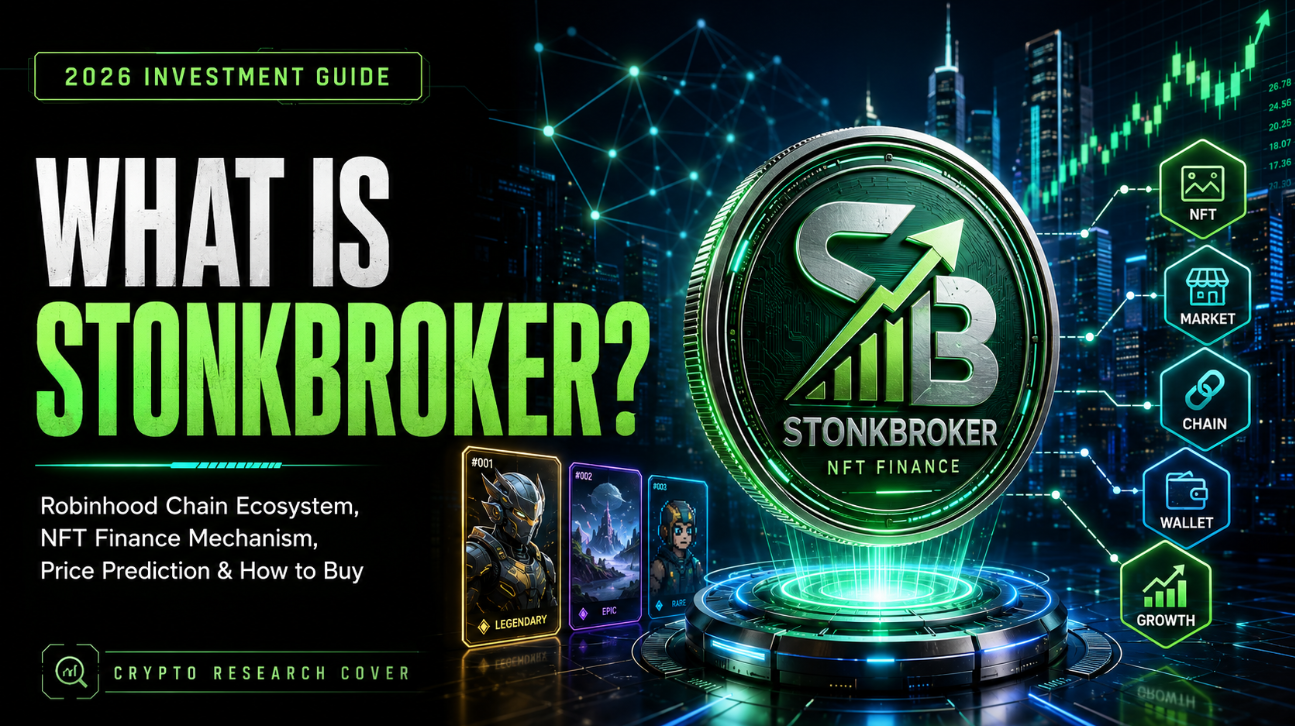
That question matters, because STONKBROKER is not the same as traditional tokenized stocks. It is not an on-chain representation of real stocks like Tesla, NVIDIA, or TSMC, nor is it a simple ETF substitute. According to official StonkBrokers materials, StonkBrokers is an NFT/DeFi ecosystem project built on Robinhood Chain. Its core consists of 4,444 pixel-art stock broker NFTs, each equipped with an ERC-6551 Token Bound Account (TBA) that gives the NFT its own on-chain wallet, and each can receive stock tokens and other on-chain assets at the time of minting.
In other words, STONKBROKER is more like an ecosystem token built around Robinhood Chain, NFT financialization, on-chain stock rewards, DeFi trading mechanics, and community culture. It carries the meme DNA of “Stonk” internet stock culture, while also possessing financial attributes tied to NFTs, TBA wallets, DeFi interactions, and ecosystem utility.
So, understanding STONKBROKER isn’t about asking “is it a stock?” – it’s about answering: What are StonkBrokers NFTs? Why does ERC-6551 matter? What role does the STONKBROKER token play in the ecosystem? And how does it differ from tokenized stocks like TSMB or NOKB?
1. What Is STONKBROKER? Why Does a “Stock Broker” Themed Token Enter Crypto?
For many first-time searchers, the biggest confusion is asset classification.
It looks stock-related because of “Broker”; it feels like a meme coin because “Stonk” comes from internet stock culture; it has an NFT mechanism because the project revolves around StonkBrokers NFTs; and it has DeFi traits because the design includes trading, liquidity, on-chain assets, and ecosystem gameplay.
Therefore, STONKBROKER cannot be pinned to a single label. It’s best defined as a hybrid NFT + Token + DeFi asset within the Robinhood Chain ecosystem.
1.1 What Is the Basic Definition of STONKBROKER?
STONKBROKER is an ERC-20 token within the StonkBrokers ecosystem and part of Robinhood Chain’s asset universe. From a project perspective, it is tied to StonkBrokers NFTs, ERC-6551 Token Bound Accounts, on-chain stock rewards, and DeFi trading mechanisms.
It is not a traditional stock, not a stock ETF, and not a tokenized version of any public company’s shares. Buying STONKBROKER does not mean you directly hold stock or automatically gain traditional shareholder rights.
More precisely, STONKBROKER is a Web3 ecosystem token, a component of the StonkBrokers NFT financialization system. Its value does not come from corporate earnings but from ecosystem user size, NFT activity, on-chain trading demand, community reach, and Robinhood Chain development.
To check current market performance, you can visit Hibt’s STONKBROKER/USDT live quote page to view the current price, order book depth, 24-hour volume, and bid/ask spread. Hibt’s quote page provides direct access to the STONKBROKER/USDT trading market.
1.2 Why Is the Project Called “StonkBroker”?
“Stonk” is an internet culture expression tied to stock trading frenzies, retail investor sentiment, and financial meme culture – often exaggerated, humorous, community-driven, and speculative.
“Broker” refers to the traditional stockbroker, the intermediary in financial markets. By combining the two, StonkBroker creates a “chain-based stock broker” persona that bridges internet stock memes with Web3 asset trading.
This is why it catches attention: it appeals to meme fans, while also drawing interest from those following Robinhood Chain, stock tokenization, NFT financialization, and DeFi plays.
But investors must distinguish: having “stock” in the name does not make it a stock; having “stock tokens” in the ecosystem does not make STONKBROKER itself a stock token.
1.3 How Does STONKBROKER Differ from Regular Cryptocurrencies?
STONKBROKER is fundamentally different from BTC, ETH, UNI, or TSMB.
BTC’s value comes from decentralized money, scarcity, and global consensus. ETH’s value comes from smart contract infrastructure, gas demand, DeFi ecosystems, and Layer 2 growth. UNI and similar DeFi tokens rely on protocol volume, fee models, and governance. TSMB and NOKB are closer to tokenized stocks, with value tied to underlying stock prices, issuance structures, custody, and regulatory risks.
STONKBROKER fits none of these traditional categories. It’s closer to an NFT-finance ecosystem token. Its value may derive from StonkBrokers NFT holders, the ERC-6551 account mechanism, on-chain asset rewards, DeFi modules, community consensus, and Robinhood Chain ecosystem growth.
This means STONKBROKER has both meme virality and Web3 product attributes; it has speculative community traits and needs real usage data. Beginners who treat it as just another meme coin may overlook the NFT and DeFi mechanics; those who mistake it for a real stock token will grossly misjudge the risks.
2. How Does the StonkBrokers Ecosystem Behind STONKBROKER Operate?
The first step to understanding STONKBROKER is knowing it’s not an isolated token – it’s part of the StonkBrokers ecosystem.
According to official documentation, StonkBrokers consists of 4,444 pixel-art stock broker NFTs, each with an ERC-6551 Token Bound Account, and each receives stock tokens and other on-chain assets upon minting. The documentation also mentions an on-chain NFT marketplace where brokers can list their NFTs for sale or swap them with other brokers.
This indicates the core is not simply issuing a token, but building an ecosystem around NFT identities, on-chain accounts, asset holdings, and DeFi trading.
2.1 What Is the Core of the StonkBrokers Project?
The StonkBrokers core can be broken into four parts.
First, the Broker NFT – each is a pixel-art stock broker character. It’s not just a profile-picture NFT but an identity gateway into the ecosystem.
Second, the ERC-6551 Token Bound Account – meaning the NFT has its own on-chain wallet. Traditional NFTs are usually collectibles or images; ERC-6551 allows NFTs to hold tokens, other NFTs, or on-chain assets like an account.
Third, the stock tokens reward mechanism – official materials note that Broker NFTs receive stock tokens at minting, making them not just display pieces but potential on-chain asset containers.
Fourth, DeFi trading mechanisms – the project page indicates that Robinhood Chain’s DeFi module goes live with the mainnet, including Stonk Exchange, and mentions that STONKBROKER holders can vote on transaction fee routing and other governance aspects.
Together, these four parts form the basic ecosystem logic: NFT as entry, TBA as account, stock tokens as asset content, and STONKBROKER token as the liquidity and community-finance connector.
2.2 What Is ERC-6551 Token Bound Account?
ERC-6551 is key to understanding STONKBROKER.
Traditional NFTs are typically just on-chain collectibles – they can be bought, sold, display images, or represent identity, but they cannot hold assets like a wallet. Assets are usually held in the user’s wallet, not inside the NFT.
ERC-6551 changes that. It gives NFTs their own Token Bound Account – a “bound account.” The Tokenbound official description defines ERC-6551 as enabling NFTs to have account capabilities, allowing them to perform on-chain operations and hold assets.
In plain terms: a regular NFT is like a picture; an ERC-6551 NFT is more like a character with its own wallet.
Regular NFT logic: you own the NFT.
ERC-6551 logic: you own the NFT, and that NFT itself owns an on-chain account that can hold tokens, NFTs, or other assets.
That’s why StonkBrokers can design “Broker NFT owns on-chain assets” gameplay. The NFT is no longer just an image – it becomes a financialized account gateway.
2.3 Why Can an NFT Own “Stock Tokens”?
Because ERC-6551 gives each NFT its own on-chain account, that account can theoretically hold various types of on-chain assets, including project-supported stock tokens, ERC-20 tokens, or other NFTs.
In the StonkBrokers context, each Broker NFT acts like a chain-based stock broker character – not only with a visual identity but with its own wallet that can carry on-chain assets. This turns the NFT from a “collectible” into an “asset container.”
This also differentiates STONKBROKER from typical NFT projects. Most rely on image scarcity, community status, and secondary market trading. StonkBrokers tries to combine NFTs with on-chain assets, DeFi, trading, and community finance mechanisms.
Of course, this complexity brings higher risks. Users must assess not only NFT demand but also the assets inside NFT accounts, contract rules, marketplaces, and tokenomics.
2.4 What Role Does the STONKBROKER Token Play in the Ecosystem?
The STONKBROKER token likely serves multiple roles.
It may be used for NFT ecosystem transactions, liquidity provision, DeFi interactions, community governance, fee distribution, or ecosystem incentives. The project page mentions that the STONKBROKER collection token can be traded within Robinhood Chain’s ecosystem and is linked to DeFi modules like Stonk Exchange.
However, investors should not assume that “many use cases” automatically mean value. What truly determines STONKBROKER’s value is whether these use cases are actually used by real users.
If StonkBrokers NFTs have stable holders, active secondary trading, users understanding TBA accounts, and Robinhood Chain ecosystem growth, demand for STONKBROKER may strengthen.
If NFT hype fades, trading volume drops, or ecosystem applications weaken, STONKBROKER could lose price support.
3. How Does STONKBROKER Relate to RWA and Tokenized Stocks?
The biggest misconception about STONKBROKER comes from its connection to stock culture, stock tokens, and Robinhood Chain – leading many to assume it’s a tokenized stock.
That is incorrect.
3.1 Is STONKBROKER a Tokenized Stock?
No.
STONKBROKER is not an on-chain representation of any real stock, nor is it a stock ETF. It’s an ecosystem token within StonkBrokers, tied to NFTs, TBA accounts, DeFi trading, and community mechanisms.
Tokenized stock assets usually provide price exposure to a specific real stock – e.g., TSMB relates to TSMC, NOKB to Nokia. The key questions for such assets are: What is the underlying stock? Who is the issuer? Is there custody? Proof of reserves? Redemption options? Securities regulation?
STONKBROKER’s core questions are different: Does the StonkBrokers ecosystem have users? Are NFTs active? Is the ERC-6551 mechanism being utilized? Is there real demand for STONKBROKER? Is Robinhood Chain growing?
For a deeper understanding of tokenized stocks, you can read Hibt’s What is TSMB and the logic of TSMC tokenized stock and NOKB explained and Nokia Tokenized Stock analysis. These are better suited for understanding “how real stocks are tokenized.”
3.2 What Connection Does STONKBROKER Have with RWA?
STONKBROKER is not a traditional RWA stock token, but it has an indirect relationship with the RWA trend.
Robinhood Chain’s official documentation shows that the chain is designed for tokenizing real-world assets, including Stock Tokens and ETFs, and supports holding, transferring, and combining these assets into applications on-chain. The documentation also notes that Stock Tokens are not registered under U.S. securities laws and may not be offered, sold, or delivered to U.S. persons.
This indicates that Robinhood Chain itself is oriented toward RWA and tokenized stocks. STONKBROKER, as a project within Robinhood Chain, sits under this broader umbrella, but it is not a “stock token” in the traditional sense.
More accurately, STONKBROKER is an NFT-finance ecosystem token on Robinhood Chain, benefiting from the RWA and tokenized-stock narrative, but its value does not derive from real stock prices.
3.3 How Does STONKBROKER Differ from PONS and ARMB?
To help beginners, we can place STONKBROKER within Hibt’s new financial asset content framework.
PONS leans toward Web3 ecosystem infrastructure – suitable for understanding how new tokens build value around ecosystems, protocols, and applications. For more, see PONS project mechanics and investment logic.
ARMB is more aligned with tokenized stock assets – good for understanding how traditional stocks enter the on-chain market. Read ARMB tokenized stock asset analysis.
TSMB and NOKB are closer to the tokenized stock direction, tied to TSMC and Nokia respectively, helping users understand “stock-to-chain mapping.”
STONKBROKER is different from all these. It’s not a single-stock token, but an ecosystem token combining NFTs, DeFi, Robinhood Chain, and community culture.
4. Why Is STONKBROKER Gaining Attention in 2026?
STONKBROKER’s popularity isn’t just about its catchy name – it hits several 2026 market keywords: Robinhood Chain, RWA, NFT financialization, on-chain stock assets, DeFi modules, and community meme culture.
4.1 Why Does Robinhood Chain Matter?
Robinhood has long been associated with stock trading, retail investing, mobile finance, and mass-market trading culture. If Robinhood Chain is built around tokenized stocks, ETFs, and on-chain finance, it could bridge traditional stock users with Web3 finance.
Robinhood Chain’s documentation shows it uses ETH as the native gas token and supports ERC-4337 account abstraction for enhanced on-chain account capabilities. This means it’s not just for simple transfers but aims to support complex on-chain applications.
For STONKBROKER, Robinhood Chain provides the fertile soil. If more assets, users, trades, and DeFi apps emerge on Robinhood Chain, projects like StonkBrokers could gain more visibility.
Conversely, if Robinhood Chain ecosystem development falls short, STONKBROKER will also be affected.
4.2 Why Is NFT Financialization Becoming a Trend?
In the past, NFTs were mainly seen as images, avatars, art collectibles, or community badges – relying on scarcity, storytelling, and secondary market speculation.
But with financialization, NFTs are no longer just pictures. They can bind wallets, hold assets, integrate with DeFi, serve as on-chain identities, and participate in trading, lending, yield generation, or portfolio composition.
StonkBrokers is a case in point. The Broker NFT is not just a profile picture – it’s an on-chain character with a Token Bound Account. It can own assets, participate in ecosystem trades, and become a gateway for users to enter Robinhood Chain’s financial gameplay.
That’s why STONKBROKER deserves its own investment guide: it’s not a traditional RWA stock token, but a new asset born from the fusion of NFT financialization and stock-market culture.
4.3 Is STONKBROKER Meme or Infrastructure?
STONKBROKER carries both meme and ecosystem attributes.
Its meme side comes from the “Stonk” culture – a term naturally suited for community virality, appealing to those familiar with stock jokes, retail trading culture, and internet finance memes.
Its ecosystem side comes from NFTs, ERC-6551, Token Bound Accounts, DeFi trading, and Robinhood Chain. So it’s not just a token with a story – it attempts to build a product structure around NFTs and on-chain assets.
But investors must distinguish “speculative hype” from “real utility value.”
Hype comes from short-term sentiment, community buzz, and price swings. Real utility comes from NFT holder growth, on-chain interactions, trading volume, liquidity, functional usage, and actual token demand.
If STONKBROKER only has meme virality without real ecosystem usage, long-term price stability is unlikely. If it successfully combines NFT financialization, Robinhood Chain, and DeFi scenarios, a more sustainable investment thesis may emerge.
5. Why Does the STONKBROKER Price Rise or Fall?
Users searching for “STONKBROKER price prediction” or “STONKBROKER price prediction 2026” often want to know if it will go up.
But for emerging tokens like this, giving a price target is irresponsible. More important is understanding the factors driving price movements.
5.1 Ecosystem User Growth
The first factor is whether the StonkBrokers ecosystem has real users.
If Broker NFT holders increase, ecosystem participation rises, community activity grows, and on-chain interactions climb, STONKBROKER may gain stronger market attention.
If users only mint NFTs speculatively with no follow-up activity, token demand may decline.
5.2 NFT Trading Activity
STONKBROKER is closely tied to StonkBrokers NFTs, so NFT market activity matters.
Watch for: number of Broker NFT holders, secondary market volume, floor price trends, listing ratios, holder distribution, turnover rates, and assets held in NFT accounts.
Active NFT trading indicates ecosystem liquidity; if NFTs see no trades for long periods, STONKBROKER price may lack support.
5.3 Token Liquidity
As a token, STONKBROKER also depends on trading depth.
If the order book is thin, prices can be easily pushed up by small buys or hammered down by sell orders. Beginners should not just look at percentage gains – also check the STONKBROKER/USDT order book depth, volume, and spreads.
Before trading on Hibt, visit the STONKBROKER quote page to assess market conditions and avoid chasing pumps with insufficient liquidity.
5.4 Robinhood Chain Development
As a Robinhood Chain ecosystem asset, the chain’s own development affects market expectations.
If Robinhood Chain attracts more RWA assets, DeFi protocols, NFT projects, and users, STONKBROKER may benefit from ecosystem expansion.
If Robinhood Chain activity is lackluster or user migration is slow, STONKBROKER will also be impacted.
5.5 Overall Crypto Market Cycle
STONKBROKER, despite its unique mechanics, is still a high-risk crypto asset.
When BTC, ETH, and altcoin markets rally, new ecosystem tokens tend to attract capital. When markets turn risk-averse, smaller-cap tokens, NFT ecosystem tokens, and meme assets often experience greater volatility.
Therefore, STONKBROKER cannot be evaluated in isolation from the broader market cycle.
6. How to Interpret STONKBROKER Price Predictions?
Price predictions for STONKBROKER should not be taken as “it will definitely reach X.” Prediction tools are for scenario analysis, not investment decisions.
Hibt’s STONKBROKER price prediction page offers a price prediction calculator, short-term and long-term forecasts, with a clear disclaimer that predictions are user-feedback based and “for reference only, not investment advice.”
6.1 Watch Sentiment, Not Just Numbers
STONKBROKER has strong community culture, so sentiment significantly impacts price.
If Stonk culture, Robinhood Chain, NFT financialization, and RWA narratives all heat up simultaneously, the market may assign a higher premium. Conversely, if narratives cool, short-term prices may face pressure.
6.2 Look at Historical Trends, but Don’t Worship Them
Historical price data can help identify support/resistance levels, volume patterns, and volatility. But past performance does not guarantee future results.
Especially for new tokens, early prices are heavily influenced by liquidity, community sentiment, and whale activity – technical analysis is less reliable than for mainstream assets.
6.3 Assess Real User Demand
Ultimately, STONKBROKER’s long-term value depends on whether the ecosystem generates demand.
Investors should monitor: Are StonkBrokers NFTs being traded? Is the TBA mechanism being used? Does STONKBROKER see demand in DeFi modules? Are more users entering Robinhood Chain?
These metrics matter far more than a simple price prediction.
7. Does ETH Price Affect STONKBROKER?
ETH does affect STONKBROKER, but it’s not a decisive factor.
Robinhood Chain documentation states that the chain uses ETH as its native gas token. This means when users perform on-chain operations on Robinhood Chain, ETH ecosystem health and market sentiment can influence on-chain activity.
Also, ETH is the core asset for DeFi and Layer 2. When ETH rises, it usually signals improved risk appetite, making DeFi and on-chain assets more attractive. When ETH falls, markets become more cautious, and NFTs, memes, and new ecosystem tokens may suffer.
But STONKBROKER is not ETH. ETH is infrastructure; STONKBROKER is an application-layer ecosystem token. ETH’s value comes from smart contract network usage; STONKBROKER’s value depends more on the StonkBrokers project, NFT activity, community growth, and Robinhood Chain development.
For a mainstream benchmark, you can reference Hibt’s ETH price prediction tool. The ETH prediction page also shows a calculator, short-term and long-term forecasts, with the same disclaimer.
8. How to Buy STONKBROKER? A Step-by-Step Guide for Beginners
Users searching “how to buy STONKBROKER” usually want clear action steps, not complex theory.
8.1 What to Prepare Before Investing in STONKBROKER?
Before buying, prepare four things.
First, a trading account. Use official links to access the exchange – never click on random community links to avoid phishing.
Second, USDT or relevant trading assets. STONKBROKER trades against USDT on Hibt, so you’ll need USDT.
Third, understand the risks. STONKBROKER is a new ecosystem token involving NFTs, DeFi, Robinhood Chain, and meme culture – price volatility can be high.
Fourth, confirm the trading pair. Always double-check the token name and pair symbol on the platform to avoid buying a similarly named token.
8.2 How to Buy STONKBROKER on Hibt?
Step 1: Go to the STONKBROKER/USDT trading page and confirm the market is STONKBROKER/USDT.
Step 2: Check the latest price, 24h change, volume, order book depth, and spread. Beginners should not just look at price increases – also assess ease of execution.
Step 3: Choose a buy direction. Limit orders are recommended for beginners to avoid slippage from market orders when liquidity is thin.
Step 4: Enter the quantity of STONKBROKER or the USDT amount you wish to spend. Start with a small test order to familiarize yourself with the process.
Step 5: Confirm order details – price, quantity, fees, and total cost. Double-check before submitting.
Step 6: After execution, check your balance and record your entry cost. Manage your position based on market developments, project progress, and your risk tolerance.
8.3 What Should Beginners Watch Out For When Buying STONKBROKER?
Three common mistakes:
First, mistaking it for a low-risk stock asset because of the name. STONKBROKER is not a stock or ETF.
Second, following social media hype without checking trading depth. New tokens can have rapidly changing liquidity – bid-ask spreads and slippage can impact actual returns.
Third, going all-in on a rally. STONKBROKER is high-risk – better suited for a small portfolio allocation, not life savings or borrowed funds.
9. Investment Risk Analysis for STONKBROKER
Any financial content must address both opportunities and risks. STONKBROKER has the Robinhood Chain, NFT financialization, and community narratives, but the risks are equally clear.
9.1 Early-Stage Project Risk
StonkBrokers is an emerging ecosystem project – many mechanics are yet to be market-validated.
Will NFTs have long-term demand? Will the TBA mechanism attract users? Does the STONKBROKER token have real utility? Can the DeFi module generate sustainable volume? None of these are certain at launch.
If development falls short, STONKBROKER price could be highly volatile.
9.2 Liquidity Risk
The most common risk for small-cap tokens is insufficient liquidity.
When sentiment is strong, prices can surge; but when users try to sell, they may find thin buy support, causing rapid drops. Widening spreads, increased slippage, and difficulty executing orders are typical issues.
Therefore, always check order book depth and volume before trading STONKBROKER.
9.3 NFT Ecosystem Risk
STONKBROKER is tied to the StonkBrokers NFT ecosystem. If the broader NFT market cools, Broker NFT trading declines, user engagement drops, and the ecosystem token may suffer.
NFT financialization is both an opportunity and a risk – it adds complexity and exposes users to contract, asset, and liquidity uncertainties.
9.4 Narrative Risk
STONKBROKER carries narratives around stock culture, Robinhood Chain, NFTs, and DeFi. If these narratives gain traction, the token may get attention; if they fade, prices may retreat.
Especially for meme-adjacent assets, sentiment can shift rapidly. Do not mistake short-term hype for long-term fundamentals.
9.5 Technical and Contract Risk
STONKBROKER involves NFTs, ERC-6551 accounts, on-chain assets, and DeFi modules – so technical risks cannot be ignored.
Is the contract secure? Are NFT account assets verifiable? Are market mechanisms stable? Are permissions centralized? Are there attack vectors? All these affect investment safety.
If you cannot assess contract risk, it’s even more important to limit your position size.
10. STONKBROKER vs. BTC, ETH, and RWA Stock Tokens – Key Differences
The best way to understand STONKBROKER is to compare it with other assets – but not by surface labels.
10.1 STONKBROKER vs. BTC
BTC is digital gold – value from decentralized consensus, scarcity, and global liquidity.
STONKBROKER is an ecosystem token – value from StonkBrokers NFTs, Robinhood Chain, community spread, DeFi mechanics, and token demand.
BTC is more mature with deeper liquidity; STONKBROKER is earlier-stage, with potentially higher upside but more concentrated risk.
10.2 STONKBROKER vs. ETH
ETH is infrastructure – powering smart contracts, DeFi, NFTs, Layer 2, and stablecoins.
STONKBROKER is an application-layer asset – dependent on a specific project and community. It is not a Layer 1 or gas token, but a token built within Robinhood Chain’s ecosystem.
If ETH is the highway for on-chain finance, STONKBROKER is more like an NFT-finance application running on that highway.
10.3 STONKBROKER vs. TSMB and NOKB
TSMB, NOKB, and similar assets are closer to tokenized stocks. Their investment logic ties to underlying stocks, issuance structures, custody, price pegs, and regulatory risk.
STONKBROKER is different – it’s not a tokenized version of any stock, but an ecosystem token wrapped around NFTs, DeFi, and community culture.
So, for TSMB and NOKB, focus on the underlying stock and tokenization mechanics; for STONKBROKER, focus on NFT ecosystem health, TBA accounts, token demand, and Robinhood Chain growth.
11. What Metrics Should You Watch for STONKBROKER in 2026?
Whether STONKBROKER is worth watching cannot be judged by price alone – look at data.
11.1 On-Chain Metrics
Watch STONKBROKER holder count, on-chain transaction volume, active addresses, transfer frequency, whale concentration, and contract interactions.
If holder count grows, volume stabilizes, and active addresses increase, market participation is likely improving.
If holdings are highly concentrated or volume comes from a few addresses, beware of price manipulation and whale sell-offs.
11.2 NFT Metrics
StonkBrokers NFTs are the ecosystem’s core, so NFT metrics are critical.
Track NFT holder count, secondary market volume, floor price changes, listing ratio, holder distribution, NFT account asset holdings, and turnover rate.
If NFTs show real demand, the STONKBROKER ecosystem is healthier.
If NFTs are barely trading, token interest may be unsustainable.
11.3 Ecosystem Metrics
Ecosystem metrics include new feature launches, DeFi module activity, Stonk Exchange usage, partnerships, community events, development progress, and overall Robinhood Chain activity.
STONKBROKER is not a standalone token – it depends on ecosystem growth. Only with continued expansion can token demand emerge.
11.4 Market Metrics
Market metrics include STONKBROKER/USDT volume, order book depth, bid-ask spread, price volatility, and number of exchange listings.
If volume grows while spreads remain tight, liquidity is improving.
If price spikes on thin depth, be cautious about chasing.
12. Is STONKBROKER Worth Investing In?
STONKBROKER is worth watching, but not for everyone.
It suits three types of users:
- Those bullish on Robinhood Chain – if you believe it will attract more stock users, RWA assets, and Web3 finance apps, then STONKBROKER is an ecosystem asset to observe.
- Those who understand NFT financialization – if you know ERC-6551, TBA accounts, NFT as asset containers, and DeFi interactions, you’ll better grasp StonkBrokers’ innovation.
- Those who can tolerate high risk – STONKBROKER is a new token with high volatility and uncertainty, better suited as a small thematic position rather than a core holding.
It is not suitable for:
- Those who mistake it for a stock – it is not a stock or ETF.
- Those chasing quick moon shots – meme appeal can bring hype, but also swift pullbacks.
- Those who don’t understand NFT and DeFi risks – jumping in without knowing the mechanics leads to poor decisions during volatility.
So, “is STONKBROKER worth it?” cannot be answered with a simple yes or no. A more reasonable view: STONKBROKER represents an experiment in NFT financialization and community assets on Robinhood Chain – worth observing, but only with controlled position sizing, clear understanding of the mechanics, and continuous data tracking.
13. Summary: STONKBROKER Is an NFT-Finance Asset Within Robinhood Chain, Not a Traditional Stock Token
What is STONKBROKER?
It is the token of the StonkBrokers ecosystem, tied to Robinhood Chain, StonkBrokers NFTs, ERC-6551 Token Bound Accounts, on-chain stock token rewards, DeFi trading mechanics, and community culture.
It is not a traditional stock, not a stock ETF, and not a tokenized version of any public company’s shares. It is more like a Web3 ecosystem token that blends NFT financialization, meme virality, DeFi mechanisms, and Robinhood Chain ecosystem narratives.
STONKBROKER’s opportunities come from Robinhood Chain ecosystem growth, NFT financialization trends, StonkBrokers NFT activity, STONKBROKER token demand, and community reach.
STONKBROKER’s risks come from early-stage project status, insufficient liquidity, NFT market cooldowns, technical contract risks, meme-narrative volatility, and the broader crypto market cycle.
For beginners, the correct research order is: first understand the StonkBrokers ecosystem, then the ERC-6551 mechanism, then distinguish STONKBROKER from real stock tokens, and only then look at price predictions and buying opportunities.
To check current trading conditions, visit the STONKBROKER/USDT quote page. For price scenario references, see the STONKBROKER price prediction tool. For a mainstream benchmark, you can also check ETH price prediction to gauge overall risk appetite.
To continue exploring Hibt’s new financial asset topics, you can read What is PONS, What is ARMB, What is NOKB, and What is TSMB. These will help you understand new asset trends from multiple angles – Web3 infrastructure, tokenized stocks, RWA assets, and NFT financialization.
Ultimately, STONKBROKER is worth attention, but not blind chasing. Mature investing isn’t just asking “will STONKBROKER go up?” – it’s asking: Is Robinhood Chain ecosystem growing? Does StonkBrokers have real users? Is there genuine demand for STONKBROKER? And do you understand the risks of NFT + DeFi + meme assets?
FAQ: Common Questions About STONKBROKER
Q1: What is STONKBROKER?
STONKBROKER is the token of the StonkBrokers ecosystem, an NFT + DeFi + community asset on Robinhood Chain. It is tied to StonkBrokers NFTs, ERC-6551 Token Bound Accounts, and on-chain asset mechanisms.
Q2: What is the STONKBROKER coin?
The STONKBROKER coin can be understood as the StonkBrokers ecosystem token. It is not a payment currency like BTC, nor a traditional stock, but a Web3 asset built around NFT financialization, Robinhood Chain, and DeFi trading mechanics.
Q3: Is STONKBROKER a stock?
No. STONKBROKER is not a real stock, not a stock ETF, and not a tokenized version of stocks like Tesla, NVIDIA, or TSMC. It is an ecosystem token within StonkBrokers.
Q4: Can I buy STONKBROKER?
You may participate based on your own risk tolerance. Before buying, understand its NFT, DeFi, and community attributes, and check trading depth, liquidity, and project progress. Do not go heavy just because of short-term hype.
Q5: How to buy STONKBROKER?
You can view the market and trade via Hibt’s STONKBROKER/USDT trading entry. Prepare USDT, confirm the trading pair, check order book depth, and place orders according to your risk capacity.
Q6: Are STONKBROKER price predictions reliable?
Price predictions are for reference only. You can check the STONKBROKER price prediction page, but do not treat them as investment guarantees. What truly matters are ecosystem data, NFT activity, token liquidity, and the overall market cycle.
Q7: What’s the difference between STONKBROKER and TSMB?
TSMB is closer to a TSMC-related tokenized stock asset, with logic tied to underlying stock price and RWA mechanics. STONKBROKER is an NFT + DeFi ecosystem token whose value relies more on the StonkBrokers ecosystem, Robinhood Chain development, and community demand.
Q8: What’s the difference between STONKBROKER and ETH?
ETH is smart contract infrastructure supporting DeFi, NFTs, Layer 2, and on-chain apps. STONKBROKER is an application-layer token on Robinhood Chain, dependent on the StonkBrokers project and NFT-finance use cases.
Q9: What are StonkBrokers NFTs?
StonkBrokers NFTs are the Broker character NFTs in the project. Official materials show that each Broker NFT can have its own Token Bound Account via ERC-6551 and can hold on-chain assets.
Q10: Is STONKBROKER suitable for long-term investment?
Whether it suits long-term holding depends on Robinhood Chain ecosystem growth, StonkBrokers NFT activity, real demand for STONKBROKER, and your own risk tolerance. Beginners are better off starting with a small observation position rather than going all-in for the long haul.