
Opening: Why Has TCCBSC Suddenly Caught Newcomers’ Attention?
If you’ve recently spotted TCCBSC in BNB Chain circles, Meme coin communities, or exchange new-listing leaderboards, your first reaction is probably: What exactly is this token? Is it the same thing as TCC? Why do some platforms call it TCCBSC while others display TCryptochicks or TCC?
Let’s start with a clear conclusion:
TCCBSC is best understood as one of the trading ticketers used by exchanges for TCryptochicks. Its on-chain token symbol is commonly TCC, and the underlying network is BNB Smart Chain, often referred to as BSC / BNB Chain. Public information describes TCryptochicks as a BEP-20 token built around the BNB Chain community narrative, Meme culture, and the “bull-market warrior” persona—rather than an infrastructure project with complex product revenue, DeFi protocol cash flows, or a mature application ecosystem. WEEX’s project introduction also explicitly notes that its core drivers are community engagement, liquidity, and exchange visibility rather than heavy, technical tokenomics.
This article does not package TCCBSC as a “guaranteed profit” opportunity. Instead, it addresses the three questions newcomers care about most:
First, what exactly is TCCBSC, and does it have any fundamentals?
Second, can you actually get in and get out right now?
Third, if you choose to buy on Hibt, how do you minimize operational risk?
I. What Exactly Is TCCBSC? Let’s Tackle the “Does This Token Have Fundamentals?” Question First
The project name corresponding to TCCBSC is usually referred to as TCryptochicks. The trading symbol is displayed as TCCBSC on some platforms, while CoinMarketCap, certain aggregator pages, and on-chain data more often show it as TCC. This naming discrepancy is very important because the abbreviation “TCC” is not unique in the crypto market; newcomers can easily click on the wrong project when searching.
From publicly available information, TCryptochicks is a BEP-20 token deployed on BNB Smart Chain. Its contract address is:
0xa4390b901a63641c92327e5793b45fcb46954444
WEEX project data indicates that TCCBSC/USDT was listed on its spot market on July 6, 2026, and describes the project as a community-driven, Meme-distribution-focused token on BNB Chain. CoinMarketCap identifies the underlying token as TCryptochicks with the symbol TCC.
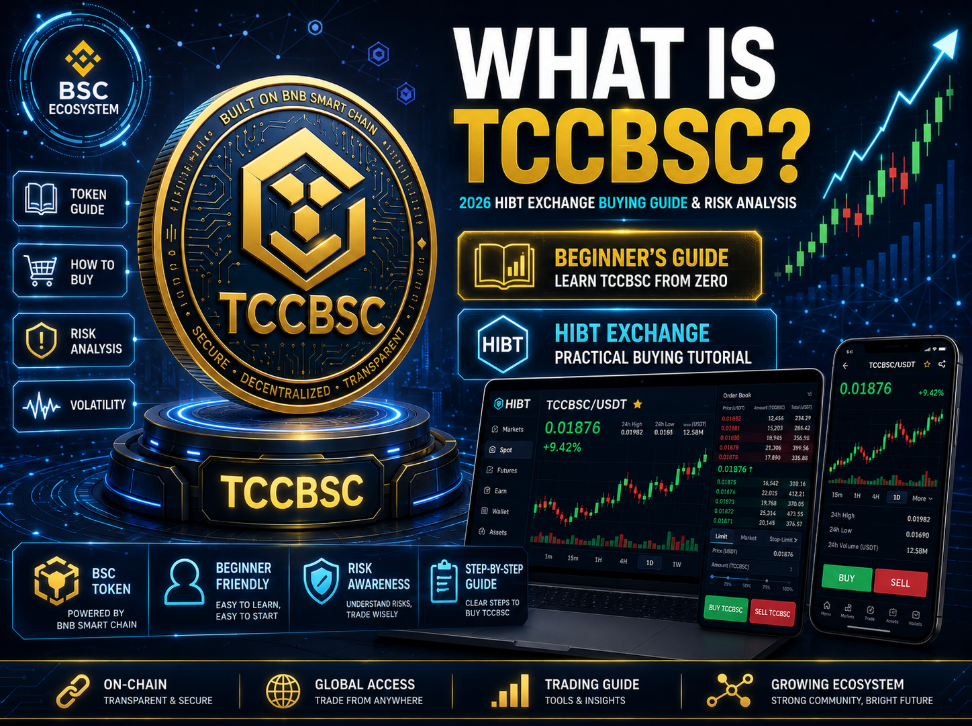
From a newcomer’s perspective, TCCBSC’s fundamentals should not be evaluated by the same standards as mature assets like BTC, ETH, BNB, or SOL. It is closer to a community-narrative Meme asset. The key metrics to watch are not on-chain TVL, protocol revenue, or developer ecosystem, but rather:
- Whether the community remains actively engaged;
- Whether there is genuine trading volume and liquidity;
- Whether the contract contains high-risk permissions;
- Whether whale holdings are excessively concentrated;
- Whether stable bid-ask markets form after exchange listing;
- Whether the project team continues to disclose roadmaps, activities, liquidity arrangements, and risk disclosures.
The biggest strength of this type of asset is fast propagation and high price elasticity; its biggest weakness is equally obvious: it lacks mature cash-flow support, prices are easily driven by sentiment, hot topics, and short-term capital flows, and can quickly retrace once the hype fades.
1.1 How Should You Read TCCBSC’s Tokenomics?
As of early July 2026, public market pages show that TCryptochicks has a max supply of 1,000,000,000 TCC. CoinMarketCap also lists a 1 billion max supply, but circulating market cap and circulating supply information are incomplete; WEEX’s airdrop documentation likewise mentions a 1 billion TCC total and max supply, though the allocation ratios have not been clearly confirmed.
This means newcomers cannot judge valuation as cheap or expensive simply by looking at the “1 billion total supply.” What truly matters is:
- Whether early-address holdings are concentrated;
- Whether team wallets, marketing wallets, and liquidity wallets exist;
- Whether there are lock-up or vesting schedules;
- Whether there are undisclosed large transfers;
- Whether the contract allows minting, blacklisting, sell restrictions, or tax-rate modifications.
If a project only discloses total supply but lacks clear explanations of allocation mechanisms, circulating ratios, unlock rules, and team wallet addresses, its transparency is still insufficient. For newcomers, this does not necessarily mean you should avoid it entirely, but you must reduce position size and treat it as a high-risk asset.
1.2 Has the Team Publicly Disclosed Identity, Audits, and Use Cases?
Currently available public information suggests TCryptochicks leans more toward a community Meme project. WEEX’s introduction notes that, as of its article publication, the project team had not released verified public identity information, and users are reminded to check contract verification status, holder distribution, and liquidity lock status.
This point is critical for newcomers.
A project without a public team is not automatically a scam, because Meme coins, community tokens, and projects launched on platforms like Four.meme often rely on community-driven propagation. However, anonymous teams significantly raise due-diligence requirements. At a minimum, you should check:
- Whether the contract is open-source verified;
- Whether there is a third-party audit;
- Whether there are abnormal permissions;
- Whether liquidity is locked;
- Whether the top 10 addresses hold an excessively high percentage;
- Whether there are密集转出 or sell-off records in a short time frame;
- Whether official social media is continuously updated, rather than only hyping around launch time.
Four.meme itself also reminds users in its disclaimer that Meme coins are highly speculative, price volatility is extreme, participants must be prepared to lose their entire principal, and the platform does not guarantee the success or profitability of any project.
So TCCBSC is not “unworthy of attention,” but it must not be bought with the standards of a low-risk asset. It is better suited as a “high-volatility observation position” or a “short-term event position,” rather than a core asset for newcomers to overweight.
1.3 How Does TCCBSC Differ from CZ Tokens?
TCCBSC shares similarities with some hot Meme coins in the BSC ecosystem and CZ narrative tokens: all rely on the BNB Chain user base, community propagation, and short-term hot-topic diffusion. But the differences are also clear.
CZ tokens are usually more directly tied to strong labels such as CZ, BNB, and Binance community sentiment; their propagation path depends more on “celebrity symbolism” and exchange-ecosystem association. You can refer to the in-depth CZ Token Deep Guide on our site to understand how such BSC ecosystem Meme coins rapidly form liquidity through community consensus.
TCCBSC’s narrative leans more toward “TCryptochicks + bull-market warrior persona + BNB Chain Meme culture.” It is not a public-chain infrastructure, a DeFi yield protocol, a stablecoin, or an RWA project. Its core value depends more on community heat, trading activity, and post-listing liquidity expansion.
Newcomers should remember one thing:
Meme coins do not lack “fundamentals”; their fundamental structure is simply different from mainstream projects. Their fundamentals are mainly reflected in community, liquidity, on-chain security, and narrative sustainability.
II. TCCBSC’s Current Market Performance and Liquidity: Focus on “Can You Get In and Get Out?”
When judging whether a new coin is worth participating in, you cannot look only at price gains. What really matters is liquidity.
Liquidity, simply put, means: when you want to buy, are there enough sell orders? When you want to sell, are there enough buy orders? If liquidity is too thin, the price may look like it’s surging, but when you actually place an order you can face severe slippage.
Slippage is the gap between the price you see and the price you actually get. For example, the page shows 0.015 USDT, but your market buy fills at an average of 0.017 USDT; the extra cost is slippage.
2.1 Which Trading Venues Has TCCBSC Listed On?
Public information shows that TCCBSC/USDT has been listed on WEEX’s spot market; WEEX’s article states the trading pair went live on July 6, 2026, accompanied by an airdrop campaign.
On Hibt’s side, the Hibt market page already displays a TCCBSC/USDT page with a “Go to Trade” entry. However, 24-hour price and volume fields on publicly scraped pages may show as zero due to dynamic loading or login requirements, so real order-book depth, bid-ask spreads, and trading volume should be verified on the live trading page after logging in.
This gives newcomers a very practical evaluation method:
Don’t just look at the words “listed on a certain platform”; open the trading page and check:
- Whether the bid-ask spread is wide;
- How much USDT buy and sell depth exists within 1% of the mid price;
- Whether recent trades are continuous;
- Whether volume is propped up by only a few large trades;
- Whether deposit, trading, and withdrawal functions are operating normally;
- Whether withdrawals are already open or still showing “coming soon.”
If a token can only be bought but not withdrawn, or if trading volume appears large but the order book is thin, proceed with caution.
2.2 Has the Price History Been Extremely Volatile?
TCCBSC is a newly listed, high-volatility asset. CoinMarketCap data scraped on July 7, 2026 showed that TCryptochicks’ 24-hour trading volume reached tens of millions of US dollars, but the price dropped significantly within 24 hours; the page also displayed a 1 billion max supply.
Binance’s price information page explicitly states that TCryptochicks is not listed on Binance trading services, but displays market data and warns that virtual asset prices can fluctuate violently and investors must bear their own decision-making risks.
For newcomers, seeing “high 24-hour volume” should not be an immediate cause for excitement, because new-coin volume at launch can come from:
- Exchange campaigns;
- Airdrop tasks;
- Market-maker wash trading;
- Short-term capital speculation;
- Community FOMO;
- Concentrated early-holder distribution.
A truly healthy trend is not a single-day pump-and-dump, but sustained trading, sustained buying, sustained community updates, and reasonable pullback structures after the initial hype fades.
2.3 How Do You Check Whale Holdings and On-Chain Distribution?
If you want to assess TCCBSC’s “whale manipulation” risk, the first step is not to look at the candlestick chart but at on-chain addresses.
The method is simple:
Copy the contract address:
0xa4390b901a63641c92327e5793b45fcb46954444
Then open BscScan, search the contract address, and focus on the following pages:
- Holders: Check the top 10, top 20, and top 50 address holding percentages;
- Transfers: Check for frequent large transfers;
- Contract: Check whether the contract is open-source verified;
- Read Contract / Write Contract: Check whether functions like mint, blacklist, pause trading, or modify tax rate exist;
- Token Tracker: Check total supply, decimals, transaction records, and holder count.
BscScan is the block explorer for BNB Chain, used to query transactions, addresses, tokens, contracts, and on-chain activity.
My personal new-coin checklist is: check the contract first, then holdings, then the order book, and only then the chart. This is the opposite of what many newcomers do. Newcomers usually look at price gains first; when it’s up, they want to chase. But what truly determines whether you can exit safely is usually not the gain, but contract permissions and liquidity structure.
III. Why Choose Hibt to Buy TCCBSC? Platform Safety & Target Audience Analysis
For newcomers, there are two common paths to buy TCCBSC:
One is on-chain via a wallet and DEX, such as MetaMask + PancakeSwap;
The other is on a centralized exchange, such as Hibt’s TCCBSC/USDT spot trading page.
The advantage of buying on-chain is self-custody, speed, and direct contract interaction; the downside is that newcomers can easily send funds to the wrong chain, buy the wrong contract, fall for approval phishing, set slippage incorrectly, or even buy a fake token with the same name.
The advantage of a centralized exchange is that the operation feels more like stock trading, suitable for newcomers; the downside is that you must complete registration and KYC, and deposits, withdrawals, and trading are subject to platform rules.
3.1 Hibt’s Regulatory Disclosures
According to Hibt’s Help Center disclosures, Hibt’s operating entity KAIXUAN NETWORK CO., LTD. has completed Canadian MSB registration, registration number M22503476, covering money transfer, foreign exchange, virtual currency trading, and payment services. Hibt also disclosed in its U.S. MSB registration statement that the operating entity completed FinCEN MSB registration, registration number 31000298581033.
In addition, Hibt’s Help Center discloses Australian financial services license information, showing AFSL number 435823, and reminds users that specific details should be verified against official ASIC records.
3.2 Hibt’s Security Mechanisms
In a 2025 security upgrade press release, Hibt mentioned that the platform employs multi-layer encryption technologies and security measures, and stores funds in cold wallets to reduce hacking risks. The press release also noted that Hibt supports spot, derivatives, margin, and staking features.
From a newcomer’s perspective, using any centralized exchange requires four actions:
- Enable Google Authenticator or similar 2FA;
- Set a strong password, not reused from other sites;
- Enable an anti-phishing code;
- Test with a small withdrawal before moving large amounts.
If you plan to hold large assets long-term, leaving everything on the exchange is not recommended. Exchanges are suitable for trading and short-term management; long-term cold storage should still consider hardware wallets or well-secured self-custody wallets.
3.3 Hibt Fees and Newcomer Experience
Third-party review site CoinGape, in its 2026 Hibt review, listed Hibt’s spot base fee as 0.2% and contract base fee as 0.05%, noting that full platform access typically requires KYC.
A 0.2% spot fee is not the lowest in the industry, but for newcomers, fee rate is not the only criterion. What matters more is:
- Whether the interface is easy to understand;
- Whether there is a Chinese interface and Help Center;
- Whether deposit and withdrawal paths are clear;
- Whether small-cap trading pairs are easy to search;
- Whether customer service and ticket entry points are clear;
- Whether order history and fund flows can be viewed.
Hibt’s page navigation includes quick buy, markets, spot, contracts, copy trading, earn, Help Center, submit ticket, official channel verification, and other entries—suitable for newcomers to gradually complete the loop from “check market price → deposit → spot trade → view assets.”
IV. Complete Step-by-Step Guide to Buying TCCBSC on Hibt
The section below is written from a newcomer’s perspective; it does not assume you are already familiar with exchanges.
Step 1: Register a Hibt Account
Go to the Hibt official website and click register. You typically need:
- A frequently used email address;
- A secure password;
- A mobile or email verification code;
- Identity documents required for subsequent KYC.
After registering, do not rush to deposit. First complete three things:
First, enable 2FA.
Second, confirm you are visiting the official Hibt domain, not an ad-phishing site.
Third, on Hibt’s “Official Channel Verification” page, verify whether customer service emails, social media accounts, or links are authentic. Hibt’s official verification page explains that users can enter an account or email to verify HiBT staff identity to prevent phishing.
Step 2: Complete KYC Identity Verification
Most centralized exchanges require KYC for full functionality. Hibt’s AML/KYC policy states that the platform collects identity information and contact details, and conducts customer due diligence and transaction monitoring.
Newcomer KYC tips:
- Document photos must be clear;
- Name, document number, and date of birth must be accurate;
- Do not use someone else’s identity documents;
- Do not buy so-called “verified accounts”;
- Do not send document photos to unknown customer service agents in private chats.
If someone messages you on Telegram, WeChat groups, or X DMs claiming they can “speed up KYC” or “internally unlock your account,” treat it with extreme suspicion.
Step 3: Deposit USDT
Buying TCCBSC usually requires depositing USDT first. Before depositing, you need to understand the concept of “chain.”
USDT can exist on many chains, such as TRC-20, BEP-20, ERC-20, etc. Different chains have different address formats, fees, and arrival speeds.
The most common mistake newcomers make is: withdrawing on Chain A but depositing to Chain B.
For example, if you select TRC-20 to withdraw USDT from another platform but choose a BEP-20 address on Hibt’s deposit page, your assets may fail to arrive automatically and may require a complex appeal process.
When depositing, it is recommended to:
- Open Hibt’s assets page;
- Select deposit;
- Search for USDT;
- Select the network you intend to use;
- Copy the deposit address;
- Go back to the original platform to withdraw;
- The network must match exactly;
- For the first time, deposit only a small amount, such as 10–20 USDT, to test;
- After it arrives, deposit a larger amount.
TRC-20’s advantage is usually stability and wide usage; BEP-20’s advantage is usually lower on-chain fees and closer proximity to the BNB Chain ecosystem. But whether it is available, what the fee is, and how long it takes to arrive should all be based on the real-time display on Hibt’s deposit page.
Step 4: Search for the TCCBSC/USDT Trading Pair
After USDT arrives, go to Hibt’s spot trading page and search for:
TCCBSC
Or go directly to the TCCBSC/USDT market page to view. Hibt’s page already provides the TCCBSC/USDT market entry and a “Go to Trade” button.
After entering the trading page, do not immediately click “Buy.” First look at three things:
- The latest executed price;
- Bid and ask depth;
- Recent trade records.
If the bid-ask spread is wide, the order book is thin. For example, if the best bid is 0.014 and the best ask is 0.016, the difference looks like only 0.002, but the percentage gap may already exceed 10%. In this case, it is not suitable to chase with a market order.
Step 5: Market Order vs. Limit Order—How to Choose?
Market Order: Fills immediately at the best available market price. Advantage: fast. Disadvantage: potentially large slippage.
Limit Order: You set the price you want to buy at; the order only fills when the price reaches your level. Advantage: controllable. Disadvantage: you may not get filled.
For newcomers buying a highly volatile new coin like TCCBSC, I recommend prioritizing limit orders. For example, if the current price is 0.015, you can place a limit order at 0.0145 or 0.0142 and wait for a pullback to fill, rather than chasing emotionally with a market order.
If you must use a market order, keep the amount small. For example, if your total planned purchase is 100 USDT, you can first test with 10–20 USDT to see the average fill price and slippage, then decide on follow-up actions.
Step 6: Where to View Assets After Buying?
After the purchase is complete, go to Hibt’s assets page and search for TCCBSC. You should see:
- Available balance;
- Frozen balance;
- Valuation amount;
- Deposit, withdrawal, and transfer entry points;
- Historical orders and trade details.
If assets show as “frozen,” common reasons include:
- You have an unfilled limit order;
- Assets are under withdrawal review;
- Platform campaign rewards are pending release;
- The risk control system requires additional verification;
- The current asset does not support certain operations.
First check “Open Orders.” If you have an unfilled order, canceling it will usually return frozen assets to available balance.
Step 7: Should Long-Term Holders Transfer to MetaMask?
If you are only doing short-term trading, keeping it in your Hibt spot account is more convenient.
If you plan to hold long-term and the amount is large, you can consider transferring to MetaMask—but only if you know how to manage private keys and seed phrases.
Before withdrawing, you must do four things:
- Confirm the real contract address of TCCBSC;
- Confirm whether Hibt’s withdrawal network supports BNB Smart Chain;
- Switch to BNB Chain in MetaMask;
- Test with a small withdrawal first.
If the balance does not display after withdrawing to MetaMask, it does not necessarily mean the assets did not arrive. Many BEP-20 tokens require manually adding the contract address. In MetaMask, you can select “Import Token,” paste the TCCBSC / TCC contract address, and then check the balance.
V. Risk Assessment & Pitfall Avoidance Guide Before Buying TCCBSC
The most dangerous thing about new coins is not the price drop—it’s that you don’t realize what risks you are actually taking.
5.1 How to Identify “Honeypot” Tokens on BSC?
A “honeypot” token refers to a token that can only be bought but not normally sold. It may restrict selling through contract permissions, or use blacklists, transaction taxes, or trading pauses to prevent ordinary users from exiting.
Before buying TCCBSC, it is recommended to do the following checks:
- On BscScan, check whether the contract is open-source;
- Check whether sensitive functions like blacklist, pause, setTax, mint, or ownerOnly exist;
- Check whether a large number of addresses bought but cannot sell;
- Check whether PancakeSwap or other DEXs allow small test sells;
- Check whether top addresses frequently transfer in short time frames;
- Check whether the liquidity pool is locked;
- Check whether the project team publicly discloses contract permissions.
BSC Meme token rug pull risks have already attracted researcher attention. A 2026 research paper on BSC Meme token rug pull warnings noted that the high-frequency issuance and short-cycle speculation of Meme tokens significantly amplify rug pull risks, and attempted early risk identification through trading behavior, address patterns, and capital flow characteristics.
For newcomers, you don’t need to understand all the code from the start, but you must develop the habit: If you haven’t checked the contract, don’t go heavy; if you haven’t looked at liquidity, don’t chase highs; if you don’t understand permissions, don’t hold long-term.
You can also refer to the in-depth ANOME Deep Guide on our site for new-coin due diligence methods, treating “project background, contract address, holder structure, exchange depth, and social media continuity” as a fixed checklist.
5.2 How to Independently Verify the TCCBSC Contract Address?
Verification steps are as follows:
First, copy the contract address:
0xa4390b901a63641c92327e5793b45fcb46954444
Second, open BscScan.
Third, paste the contract address into the search box.
Fourth, confirm whether the token name, symbol, chain, and holder data displayed on the page match.
Fifth, click Holders to check holding concentration.
Sixth, click Contract to check whether the source code is verified.
Seventh, click Transfers to check for abnormal large transfers.
If you see another so-called “TCCBSC contract address” in a community, do not blindly copy and buy. Always cross-verify with CoinMarketCap, BscScan, exchange announcements, and official project social media. If the contract address is different, it may be a different token—or even a fake token.
5.3 The Most Common Operational Mistakes Among Newcomers
The pitfalls I’ve seen newcomers most easily fall into in new-coin trading are usually not complex financial problems, but basic operational mistakes:
- Sending to the wrong chain—using TRC-20 as BEP-20;
- Using the contract address as the deposit address;
- Clicking a fake Hibt website from a search engine;
- Downloading a fake app through a suspicious link;
- Entering a verification code in a Telegram private chat;
- Not doing a small test first and depositing a large amount on the first try;
- Chasing with a market order and getting a fill price far higher than expected;
- Not checking order-book depth and assuming the page price is the executable price;
- Withdrawing to MetaMask but not adding the token contract, thinking assets are lost;
- Putting all funds into one new coin and being unable to withstand a price pullback.
The solutions to these problems are also simple:
Only do one action at a time, always test with a small amount first, and always verify the network, address, and trading pair.
5.4 What If You Encounter Withdrawal Issues or Account Abnormalities?
First, do not trust any “customer service” that messages you privately.
The correct process is:
- Go to the Hibt official website;
- Contact the platform through the Help Center or submit a ticket entry;
- Prepare your UID, transaction hash, deposit address, withdrawal address, and time screenshots;
- Do not publicly post your ID, email, or full transaction screenshots in communities;
- Verify staff identity through the official channel verification page.
Hibt provides “Submit Ticket” and “Official Channel Verification” entry points. Users can verify identity sources through official pages rather than trusting third-party private messages.
VI. TCCBSC Investment Strategy & Position Management Advice
Tokens like TCCBSC are not suitable for a “I’m bullish, so I’m all-in” approach. What newcomers need most is position management, not prediction ability.
6.1 What Is an Appropriate Position Size for a Newcomer’s First Altcoin Allocation?
If you are a beginner, I recommend keeping your first allocation to a high-volatility asset like TCCBSC within 5% of total capital. If you have slightly more experience and can tolerate larger swings, I still do not recommend exceeding 10%.
Here, “total capital” does not mean your bank account balance; it means the risk capital you are willing to put into the crypto market and can afford to lose.
For example:
If your total crypto asset budget is 1,000 USDT, then a new coin like TCCBSC should be in the 20–50 USDT range for the first position, rather than buying 500 USDT right away.
If your total budget is only 300 USDT, then a first purchase of 10–20 USDT is more reasonable. A newcomer’s first goal is not to make big money, but to learn the complete process: register, deposit, place order, cancel order, view assets, withdraw, and small test sell.
6.2 DCA or Lump-Sum Bottom-Fishing?
For a new coin like TCCBSC, I do not recommend newcomers make a lump-sum bottom-fishing purchase. Because you rarely know what the real bottom is.
A more reasonable approach is to split into three tranches:
Tranche 1: Observation position, 20%–30% of planned capital.
Tranche 2: Add on confirmed pullback, 30%–40%.
Tranche 3: Add after a breakout of key levels or liquidity improvement, 30%.
For example, if you plan to allocate a maximum of 100 USDT, you can do this:
Buy 30 USDT first.
If the price pulls back but does not break structure, buy another 30 USDT.
If subsequent trading volume continues to increase, the order book thickens, and community and announcements stay active, then consider buying the remaining 40 USDT.
If the price immediately drops below your risk line after the first purchase, do not rush to average down. The most common mistake beginners make is: the more it drops, the more they buy, turning a “small position for trial” into a “heavy position trapped.”
6.3 How to Set Take-Profit and Stop-Loss?
If Hibt’s trading page supports conditional orders or stop-loss/take-profit functions, you can set them in advance. If conditional orders for this trading pair are not yet supported, you can use manual price alerts as a substitute.
A simple strategy is:
- If it falls 15%–25% below your entry price, reassess;
- If it breaks key support with expanding volume, consider stopping out;
- After a 50% gain, sell 20%–30%;
- After a 100% gain, at least recoup your principal;
- Keep the remaining position as a profit-only runner.
For example, if you bought 100 USDT of TCCBSC and it rises to 200 USDT, you can first sell 100 USDT to recover your principal, and continue holding the rest. Even if the price later falls back, your psychological pressure will be much lower.
6.4 After a Short-Term Surge, Should You Sell in Tranches or Exit All at Once?
My recommendation is: Newcomers should prioritize selling in tranches.
The problem with exiting all at once is that if the price keeps rising, you’ll regret it; the problem with not selling is that if the price quickly retraces, you’ll also regret it. Selling in tranches reduces emotional interference.
You can use this simple rule:
Up 30%: sell 20%.
Up 50%: sell another 20%.
Up 100%: recoup principal.
Remaining position: only gamble with profits.
This is not a return-maximization strategy, but it is a risk-control strategy that newcomers are more likely to execute.
VII. Frequently Asked Questions (FAQ)
1. Are TCCBSC and TCC the Same Project?
In currently available public information, TCCBSC is usually the trading ticker used on the exchange side, while platforms like CoinMarketCap more often display the underlying token as TCryptochicks (TCC). WEEX documentation also notes that TCCBSC/USDT is the trading pair name, while CoinMarketCap tracks the on-chain symbol as TCC.
Newcomers should remember: The contract address is the final authority, not just the name.
The contract address corresponding to TCCBSC / TCC should be verified as:
0xa4390b901a63641c92327e5793b45fcb46954444
2. Why Does My Asset Show as “Frozen” After Buying on Hibt?
Common reasons include:
- You have an unfilled limit order;
- Assets are under withdrawal review;
- Campaign participation rewards have not yet been released;
- Platform risk control requires additional verification;
- The current trading pair or asset is under maintenance.
First check “Open Orders.” If it is an order freeze, canceling the order will usually restore the available balance.
3. Why Does My Balance Not Show After Withdrawing TCCBSC to MetaMask?
The most likely reason is that the token contract has not been manually added.
Solution:
- Open MetaMask;
- Switch to BNB Smart Chain;
- Click Import Token;
- Paste the TCCBSC / TCC contract address;
- Confirm token symbol and decimals;
- Add and check balance.
If the wrong chain is selected, the balance will also not display. For example, if you withdrew to BNB Chain but are checking on Ethereum Mainnet, it naturally will not show.
4. Where Can I Find Hibt’s New Listing Announcements?
You can check through Hibt’s homepage “Platform Announcements,” Help Center, news articles, or official social media. Hibt’s market page footer also provides entries for platform announcements, Help Center, official channel verification, compliance information, and submit ticket.
Newcomers are advised not to rely solely on community screenshots; it is best to verify against official website announcements and trading pages.
5. Is TCCBSC Worth Buying?
A more accurate way to put it is: Is TCCBSC worth observing with a small position, rather than going all-in right away?
Its strengths are new-coin heat, BNB Chain Meme narrative, exchange visibility, and strong price elasticity; its risks are limited team transparency, incomplete tokenomics disclosure, large price volatility, liquidity that can change rapidly, and on-chain permissions that require ongoing checks.
If you are a newcomer, I recommend completing three things first:
- Learn the buy-sell process with 10–20 USDT;
- Check the contract and holdings on BscScan;
- Set clear stop-loss and take-profit plans.
Only after doing these should you consider whether to add more.
VIII. Conclusion: TCCBSC Is Worth Watching, But Must Be Approached with a “New-Coin Risk Framework”
TCCBSC is not an asset suitable for blind heavy positioning. It is more like a community Meme asset newly emerging in the BNB Chain ecosystem; its short-term price is heavily influenced by narrative, liquidity, exchange listings, and market sentiment.
For newcomers, the right posture is not to ask “Will it moon?” but to ask:
- Have I confirmed the real contract address?
- Have I looked at the BscScan holder distribution?
- Do I understand the naming difference between TCCBSC and TCC?
- Do I know how to deposit USDT on Hibt?
- Do I know how to use limit orders to control slippage?
- Have I set a maximum loss amount?
- Can I afford to lose this entire sum?
If you don’t have answers to these questions, don’t rush to buy.
If you have completed basic due diligence and are only participating with a small position within 5% of total assets, then TCCBSC can serve as a BSC ecosystem new-coin observation target. But whether trading on Hibt or any other platform, always remember one thing:
The biggest opportunity in new coins comes from volatility; the biggest risk in new coins also comes from volatility. Protect your principal first, then think about returns.
About the Author
HIBT Research focuses on crypto newcomer education, exchange hands-on tutorials, BSC ecosystem new-coin research, and risk identification methodology. Articles are based on public information, on-chain data, exchange pages, and practical workflows, helping newcomers build a complete judgment framework from “understanding a project” to “buying safely” to “position management.”
Disclaimer
This article does not constitute investment advice, legal advice, or financial advice. Crypto asset prices are highly volatile, especially Meme coins, newly listed assets, and low-market-cap tokens, which may experience significant rises or falls in a short period. Before purchasing TCCBSC or any crypto asset, users should independently verify the contract address, platform announcements, on-chain data, trading depth, and local legal restrictions, and make decisions independently based on their own risk tolerance.