
If you’ve come across SNXXB on a trading platform, price tracker, or social feed, your first questions are probably: What exactly is SNXXB? Is it a new crypto coin, or is it a tokenized version of a traditional financial asset? How does it relate to SNDK, SanDisk, leveraged ETFs, and RWA assets?
In short, SNXXB is not a traditional public-chain token, meme coin, DeFi governance token, or generic AI-themed crypto. More precisely, SNXXB is the Tradr 2X Long SNDK ETF Tokenized bStocks — a tokenized asset linked to the Tradr 2X Long SNDK Daily ETF. According to CoinMarketCap, SNXXB is a tokenized bStock that provides economic exposure to that ETF and, where permitted by applicable law, may include the right to convert into the underlying security on Binance.com.
This means SNXXB is not a typical crypto project token. It’s closer to a tokenized ETF, tokenized stock, and RWA (Real World Asset). Its underlying logic isn’t “a project launched a new coin” — instead, it brings the 2x long ETF exposure tied to SNDK into the crypto trading environment via tokenization.
You can view SNXXB real-time prices, trading data, and market stats on Hibt, and also check the SNXXB price prediction page for market trends and reference forecasts.
1. What Is SNXXB, and Why Is This Asset Appearing in Crypto Markets?
When users search “what is SNXXB,” the first thing to clarify is its asset classification.
SNXXB is not a regular cryptocurrency. It’s not a native crypto like BTC, not a public-chain infrastructure asset like ETH, and not an ecosystem token from DeFi, GameFi, or a memecoin project.
SNXXB is closer to the tokenized ETF subset of RWA (Real World Assets).
RWA refers to real-world assets — stocks, ETFs, bonds, commodities, gold, real estate, and more — that are brought onto blockchains or tokenized for crypto market access.
Tokenized ETFs are a major branch of RWA. Rather than creating a new on-chain project, they express the price performance or economic exposure of traditional ETFs in token form, allowing crypto users to trade them with USDT or other digital assets.
Public information shows that SNXXB corresponds to the Tradr 2X Long SNDK ETF Tokenized bStocks. Let’s break down the key terms:
- SNDK points to SanDisk-related stock assets.
- SNXX is the Tradr 2X Long SNDK Daily ETF.
- SNXXB is the tokenized bStock asset tied to SNXX.
According to Tradr’s official description, the Tradr 2X Long SNDK Daily ETF seeks, before fees and expenses, to deliver two times (200%) the daily performance of SanDisk Corp common stock — but it does not seek to achieve its investment objective over periods longer than a single trading day.
So SNXXB can be understood as:
- A 2x long ETF exposure to SNDK-related assets.
- That ETF exposure is tokenized.
- Users can trade it in crypto markets via the SNXXB/USDT pair.
That’s the core asset positioning of SNXXB.
2. Is SNXXB a Coin, a Stock, or an ETF?
Many newcomers see SNXXB/USDT and naturally call it the “SNXXB coin.” That’s understandable from a search habit perspective, but it’s not accurate from an asset-class standpoint.
SNXXB is not a regular coin.
It’s not a SanDisk stock in a traditional brokerage account.
It’s not an SNXX ETF share held directly in a brokerage account.
Its more precise classification is: a tokenized 2x leveraged ETF asset tied to SNDK.
To understand SNXXB, you need to grasp three layers:
Layer 1 – SanDisk-related stock assets
SanDisk is a storage and flash-memory company. Market interest typically revolves around NAND, data storage, AI data centers, storage demand, and semiconductor cycles. SanDisk’s investor relations page highlights ongoing product developments in high-density, low-power, high-performance 3D NAND flash memory, supporting data-intensive workloads.
Layer 2 – Tradr 2X Long SNDK Daily ETF (SNXX)
This ETF seeks 200% of SNDK’s single-day performance. It’s a single-stock leveraged ETF — not a standard index fund, not a low-risk fund. SEC filings also note that the Tradr 2X Long SNDK Daily ETF seeks daily leveraged investment results and is very different from most ordinary ETFs.
Layer 3 – SNXXB
SNXXB brings that ETF exposure into crypto markets as tokenized bStocks, letting users participate in related price movements via digital asset trading.
Therefore, SNXXB is neither a traditional stock, nor a plain ETF, nor a typical crypto token — it’s a hybrid: leveraged ETF + tokenized stock + RWA + crypto trading access.
3. Why Are More Traditional Assets Entering Crypto Markets?
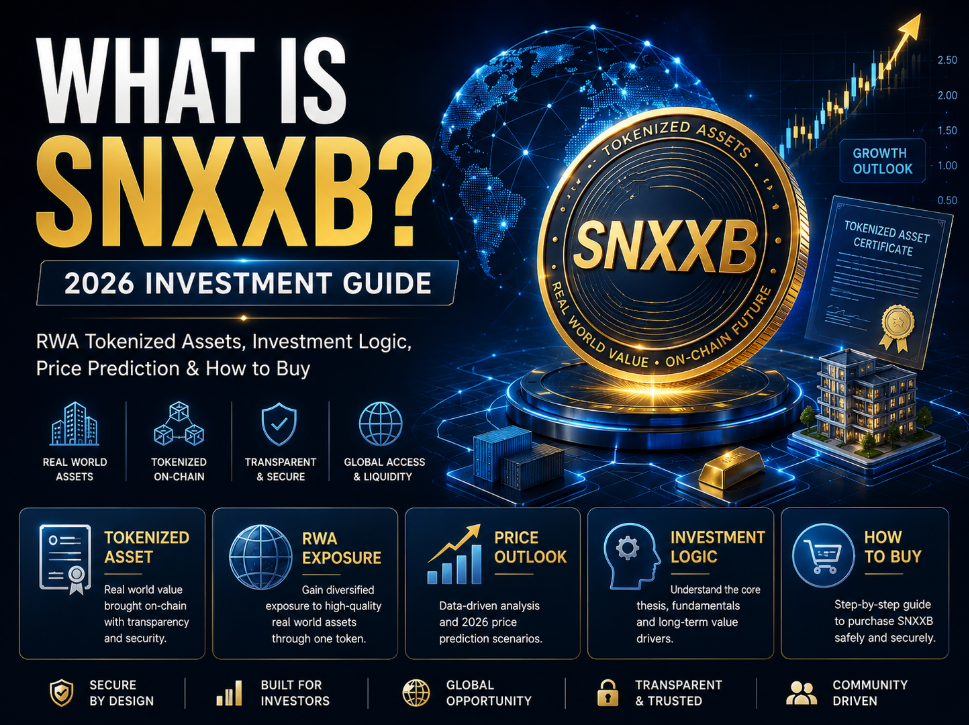
SNXXB isn’t an isolated event — it’s part of the broader RWA trend.
In the past, investing in stocks, ETFs, gold, bonds, or other traditional assets required a brokerage account. That process was subject to regional restrictions, account-opening hurdles, trading hours, funding gateways, tax rules, and market-access limits.
The RWA model attempts to tokenize real-world assets:
- The real asset is identified and validated.
- Issuers or custody structures back the underlying asset.
- Platforms issue corresponding tokens.
- Users trade them in crypto markets using USDT or other digital assets.
This brings several notable changes:
1. Lower participation barriers for some users.
Many crypto users don’t have traditional U.S. stock accounts but are already comfortable with USDT, exchanges, and Web3 wallets. Tokenized stocks and ETFs let them access traditional asset price exposure in a familiar crypto environment.
2. Greater trading flexibility.
Traditional stocks and ETFs have fixed trading hours, while crypto markets operate nearly 24/7. Tokenized RWAs can theoretically offer more flexible trading experiences.
3. Bridging traditional finance and Web3.
Looking ahead, tokenized stocks and ETFs could be used not just for spot trading but also for on-chain asset management, DeFi collateral, RWA index products, and cross-chain financial instruments.
As OKX’s introduction to tokenized stocks notes, tokenized stocks can be traded with USDT, bringing stock assets into the crypto trading experience. This shows that traditional financial assets entering crypto markets is becoming a focus for multiple exchanges and RWA projects.
However, convenience does not equal low risk. Tokenized assets carry not only underlying asset risk but also issuer risk, custody risk, liquidity risk, regulatory risk, and price-deviation risk.
4. What’s the Investment Logic Behind SNXXB? Why Are Investors Paying Attention?
SNXXB draws attention not because it’s “cheap” or “looks like a new coin,” but because it connects several hot themes:
First, SanDisk and the memory-chip sector.
With rising demand for AI model training, AI inference, data-center expansion, and high-performance computing, data storage and flash-memory assets have gained market traction. Recent media reports also highlight that AI data centers are driving demand for memory and data-storage devices, boosting “memory stocks.”
Second, leveraged ETFs tied to SNDK.
SNXX is the Tradr 2X Long SNDK Daily ETF — not plain SNDK equity exposure, but 2x daily long exposure. Tradr’s website explicitly states that the fund seeks twice the daily performance of SanDisk common stock and does not seek to achieve its objective over any period other than a single trading day.
Third, on-chain RWA assets.
SNXXB lets crypto users participate in traditional financial asset exposure via tokens. This aligns with Hibt’s current RWA content strategy: helping users understand how traditional assets are traded through crypto markets.
Fourth, USDT trading access.
For crypto users, the SNXXB/USDT pair is more familiar than a brokerage account. They don’t need to jump from crypto to traditional brokerages — they can observe and trade the asset directly on a digital-asset platform.
So, SNXXB’s investment logic isn’t typical crypto-project logic. It’s a combination of: SanDisk-related assets + 2x leveraged ETF + RWA tokenization + crypto trading liquidity.
5. Where Does SNXXB’s Value Come From?
SNXXB’s value does not derive from an on-chain application ecosystem or DeFi protocol revenue. Instead, it comes from multiple layers working together:
1. Underlying asset value.
SNXXB is tied to SNXX, whose reference is the daily performance of SanDisk Corp common stock. SNDK stock movement is a primary variable for SNXXB price assessment.
2. Leveraged ETF mechanics.
SNXX is a 2x long daily ETF. This leverage amplifies both daily gains and daily losses.
3. Tokenized bStocks structure.
As a tokenized bStock, SNXXB’s value is also affected by issuance mechanisms, underlying asset support, custody arrangements, applicable law, and exchange rules.
4. Market liquidity.
If SNXXB has higher trading volume, tighter bid-ask spreads, and sufficient order-book depth, user experience improves. Conversely, even if the underlying asset has investment merit, poor liquidity can hurt actual returns.
5. RWA market sentiment.
If tokenized stock and ETF markets continue growing, more users may want to participate in traditional assets via crypto, potentially boosting SNXXB’s visibility.
Thus, SNXXB’s value cannot be judged by price charts alone. A more rational approach is to study the underlying asset, the ETF mechanics, the tokenized structure, and trading liquidity simultaneously.
6. What Key Information Should You Know Before Investing in SNXXB?
Before investing, at minimum, confirm these four categories:
1. Asset identity.
Verify that SNXXB is the Tradr 2X Long SNDK ETF Tokenized bStocks — not a plain SNDK stock, not a typical crypto project token.
2. Underlying asset and ETF mechanics.
SNXX is a 2x daily leveraged ETF. Leveraged ETFs target daily results — they should not be simplistically treated as 2x long-term returns. Tradr explicitly states that SNXX does not seek to achieve its investment objective over periods other than a single trading day.
3. Issuance structure.
Understand who issues SNXXB, whether there is underlying asset backing, custody arrangements, whether redemption or conversion is supported, and if any geographic restrictions apply.
4. Trading data.
Monitor SNXXB/USDT price, volume, bid-ask spreads, order-book depth, and volatility. If liquidity is thin, investment risks increase significantly.
These four categories matter far more than just looking at the price.
7. What’s the Biggest Difference Between SNXXB and a Typical Crypto Project?
The biggest difference lies in where value comes from.
A typical crypto project usually depends on technology roadmaps, on-chain applications, user growth, ecosystem activity, protocol revenue, tokenomics, and community consensus.
SNXXB, on the other hand, depends on real-world assets and financial product structures.
For a typical crypto token, the core question is: Does this project have genuine users, real demand, and a sustainable ecosystem?
For SNXXB, the core questions are: How is the underlying SNDK-related asset performing? How does the SNXX leveraged ETF mechanism affect returns and risks? Is the tokenization structure transparent? Is trading liquidity sufficient?
Therefore, analyzing SNXXB cannot be done with altcoin analysis methods alone.
You need three perspectives simultaneously:
- Traditional equity and semiconductor sector perspective.
- Leveraged ETF product mechanics perspective.
- RWA and tokenized-stock trading perspective.
This is why SNXXB content pages should differ from typical coin introduction pages.
8. How Does SNXXB Work? Understanding the Tokenized Asset Mechanism
SNXXB operates via a standard tokenized-asset structure:
- A real-world financial asset exists first.
- SNXX, as a traditional ETF, provides 2x daily leveraged exposure to SNDK.
- The issuer or platform tokenizes that economic exposure.
- SNXXB enters crypto markets as a token.
- Users buy and sell via the SNXXB/USDT trading pair.
The key here isn’t that SNXXB creates a new application — it’s that it brings traditional ETF exposure into crypto markets.
So SNXXB investors need to focus on two questions:
First: Does the token have real asset backing or a clear economic exposure structure?
Second: Does the token price reasonably reflect the underlying ETF or related asset performance?
If the underlying structure is opaque, or market liquidity is insufficient, the token price may deviate from its reference value.
Thus, SNXXB is not a simple “buy if you’re bullish” asset — you must first understand the asset-mapping mechanism.
9. How Is SNXXB’s Price Formed?
SNXXB’s price is influenced by three main factors:
1. Underlying asset movements.
If SNDK stock rises, SNXX — as a 2x daily long ETF — may benefit. If SNDK falls, SNXX may suffer, and SNXXB could be affected.
2. Crypto market factors.
Since SNXXB trades in crypto markets, its price is influenced by USDT liquidity, trading demand, market sentiment, BTC and ETH trends, and RWA sector热度.
3. Token supply and demand.
Even if the underlying asset is stable, a surge in buy orders may push SNXXB higher in the short term; a wave of selling may push it lower. Trading volume, market depth, and bid-ask spreads all affect actual execution prices.
So newcomers should not assume “SNXXB equals SNXX price.” The underlying ETF is a core reference, but the token market itself also affects pricing.
10. What’s the Difference Between SNXXB and ETH? Understanding Asset Types
A common newcomer question: “Which is a better investment, SNXXB or ETH?”
You can’t directly compare them — they are not the same asset class.
ETH is the native asset of the Ethereum network. Its value comes from Ethereum network usage, gas consumption, Layer 2 ecosystems, DeFi, stablecoins, NFTs, RWA onboarding, and smart contract applications. ETH is more like a crypto infrastructure asset.
SNXXB is an RWA and tokenized ETF asset. Its value comes closer to SNDK-related asset performance, SNXX leveraged ETF mechanics, the tokenization structure, and crypto market liquidity.
- ETH represents blockchain network value.
- SNXXB represents a tokenized price exposure to a traditional financial asset.
ETH’s risks mainly stem from crypto market cycles, public-chain competition, on-chain demand, regulatory changes, and ecosystem development.
SNXXB’s risks mainly come from SNDK stock volatility, SNXX leveraged ETF mechanics, semiconductor cycles, RWA structure, trading liquidity, and platform rules.
So ETH and SNXXB cannot be simplistically compared as “which is better.” They serve different investment roles.
If you want to understand foundational crypto assets, you can refer to Hibt’s ETH price prediction. If you want to understand how traditional financial assets enter crypto markets, SNXXB is a more complex but highly representative RWA case.
11. How Does SNXXB Relate to Other RWA and Institutional Asset Cases?
SNXXB can be understood alongside Hibt’s RWA asset matrix:
- What is CRWVB — focuses on tokenized assets tied to AI infrastructure companies like CoreWeave, useful for understanding how AI cloud firms enter crypto.
- What is AXTIB — focuses on tokenized corporate stocks, helping users understand how traditional company stocks trade via tokens.
- What is AIRH — focuses on AI robotics RWA assets, useful for understanding how AI-robot-related assets are tokenized.
- What is Ethereum ETF — shows how traditional financial institutions enter crypto via ETFs.
SNXXB’s distinction is that it’s not a plain single-stock token — it’s a tokenized asset linked to a 2x leveraged ETF tied to SNDK.
That means SNXXB carries not only RWA risks but also leveraged ETF risks.
It represents not just stock tokenization, but the more complex leveraged ETF tokenization.
This is SNXXB’s differentiated position in Hibt’s RWA content matrix.
12. Why Does SNXXB’s Price Rise or Fall?
When users search “SNXXB future price trends,” they really need to understand the price drivers.
SNXXB’s price is mainly influenced by five factors:
1. SNDK stock performance.
SNXX’s investment objective is tied to SanDisk common stock daily performance, so SNDK trends are a core variable. SNDK gains may support SNXX and, in turn, SNXXB.
2. SNXX’s 2x leveraged mechanism.
SNXX is not a plain ETF. It seeks double the daily performance of SNDK. Leverage can amplify gains — and losses. SEC filings also warn that such daily leveraged ETFs are very different from most ordinary ETFs.
3. Semiconductor and storage industry cycles.
SanDisk is tied to storage, NAND, and data-center demand. If AI data centers and storage needs grow, market attention may rise. Recent reports also note strong demand from AI data centers for memory and storage devices, boosting memory stocks.
4. RWA market development.
If tokenized stock and ETF markets continue expanding, more users may want to trade traditional assets via crypto, potentially driving trading demand for SNXXB.
5. Crypto market cycles.
Since SNXXB trades in crypto markets, it’s also affected by USDT liquidity, BTC and ETH trends, market risk appetite, exchange depth, and user sentiment.
So SNXXB’s price is not determined solely by crypto sentiment, nor solely by SNDK stock — it’s the joint result of traditional assets and crypto markets.
13. SNXXB Price Prediction: How Should Investors Analyze Future Moves?
SNXXB price prediction cannot rely on historical charts alone. For an asset like SNXXB, forecasts should combine at least four dimensions:
Dimension 1 – Underlying asset analysis.
Monitor SNDK-related stock performance, SanDisk financials, storage industry demand, AI data-center trends, semiconductor cycles, and market valuations.
Dimension 2 – SNXX ETF mechanics.
Since SNXX is a 2x daily leveraged ETF, you cannot treat it as a simple 2x long-term return. Daily reset, compounding path, volatility drag, and rapid drawdown risks all affect actual outcomes.
Dimension 3 – Technical analysis.
Watch SNXXB price trends, volume, support/resistance levels, bid-ask spreads, and market depth. If volume is low, technical patterns become less reliable.
Dimension 4 – Market capital flows.
Monitor overall crypto market cycles, USDT liquidity, RWA sector sentiment, tech-stock risk appetite, and BTC/ETH movements.
You can check the SNXXB price prediction page for market trend references. But remember: predictions are research aids, not investment return guarantees.
A more prudent analytical path is:
- First, confirm SNXXB’s asset identity.
- Then, study SNDK and SNXX.
- Then, understand the 2x daily leveraged ETF mechanics.
- Then, observe SNXXB trading volume and liquidity.
- Finally, decide whether to participate based on your risk tolerance.
14. How to Buy SNXXB: A Step-by-Step Guide for Beginners
If you’re searching “How to buy SNXXB” or “SNXXB,” follow these steps:
Step 1 – Check SNXXB market data.
Go to Hibt’s SNXXB/USDT market page to view real-time price, trading info, and market trends.
Step 2 – Prepare USDT funds.
SNXXB is typically traded as the SNXXB/USDT pair. Beginners should determine their budget in advance — don’t go heavy just because you see gains or AI-storage hype.
Step 3 – Confirm the asset’s identity.
Before buying, verify that SNXXB is the Tradr 2X Long SNDK ETF Tokenized bStocks — not a plain SNDK stock, not a typical crypto token.
Step 4 – Review trading details.
On the trading page, check price, volume, order-book depth, bid-ask spreads, and recent volatility. Be extra cautious if liquidity is thin.
Step 5 – Search for SNXXB/USDT.
Confirm the trading pair name is correct, then choose your buy method based on your plan.
Step 6 – Choose market or limit order.
Market orders are for quick execution, but with thin liquidity, slippage may be significant.
Limit orders let you control your entry price. For a tokenized ETF asset like SNXXB, beginners are better off using limit orders to avoid unfavorable fills.
Step 7 – Manage position size.
SNXXB is not a low-risk asset. It involves SNDK stock volatility, 2x leveraged ETF mechanics, RWA structure, and crypto market risk. Beginners should not use excessive position sizes.
Step 8 – Continuously track the asset.
After buying, keep monitoring SNDK trends, SNXX performance, SNXXB liquidity, RWA market changes, and overall crypto market conditions.
15. What Are the Risks of Investing in SNXXB?
SNXXB’s risks must be emphasized, as it’s more complex than a typical tokenized stock.
1. Underlying asset risk.
If SNDK stock declines, SNXX may be negatively affected, and SNXXB may suffer.
2. Leveraged ETF risk.
SNXX is a 2x daily long ETF. Leverage magnifies gains — and losses. It is not suitable for beginners who don’t understand leverage mechanics to take large positions.
3. Volatility drag risk.
Daily leveraged ETF performance depends on the path. In choppy markets, even if the underlying asset ends flat, the leveraged ETF may underperform due to daily resets and volatility drag.
4. Rapid drawdown risk.
If SNDK drops sharply, SNXX could see a much larger single-day decline, and SNXXB’s price could fall quickly.
5. Industry cycle risk.
SanDisk-related assets are tied to storage, NAND, semiconductors, and data-center demand. The semiconductor industry is cyclical — demand downturns, inventory changes, price drops, and intensified competition can all affect performance.
6. Tokenization risk.
SNXXB is not an ETF share held in a traditional brokerage account. Users need to assess whether the underlying asset is genuinely backed, whether the issuer is reliable, whether custody is transparent, and whether redemption or conversion is supported.
7. Issuer and custody risk.
Tokenized assets involve issuers, custodians, and platform rules. If these are opaque, user risk increases.
8. Liquidity risk.
Niche tokens may have low trading volume, wide spreads, and thin order books. You may not be able to buy or sell at desirable prices.
9. Regulatory risk.
Tokenized stocks and ETFs sit at the intersection of traditional securities and crypto. Different jurisdictions may impose varying restrictions.
10. Crypto market risk.
Even if the underlying asset performs well, a broad risk-off move in crypto could lead to outflows from SNXXB.
Therefore, SNXXB is not suitable for newcomers who only look at gains, don’t understand leveraged ETFs, or don’t grasp RWA mechanisms, and then blindly go heavy.
16. Is SNXXB Worth Investing In? How to Build Your Own Framework
“Is SNXXB worth it?” cannot be answered with a simple “yes” or “no.” A more reasonable approach is to build a decision framework.
Those who are bullish on SNXXB typically focus on three angles:
1. Bullish on SNDK and the storage sector.
If you believe AI data centers, data storage, NAND, and high-performance storage demand will continue growing, SNDK-related assets may be worth researching.
2. Understand and accept 2x leveraged ETF risks.
SNXXB is not plain SNDK exposure — it’s tied to a 2x daily long ETF. Only those who understand leverage amplification, daily resets, and volatility drag should consider participation.
3. Bullish on long-term RWA development.
If you believe more stocks, ETFs, and traditional assets will enter crypto markets, SNXXB is a representative case in the tokenized ETF space.
But SNXXB is not for everyone:
- If you only stick to BTC and ETH and don’t want traditional asset exposure, SNXXB may not suit you.
- If you don’t understand tokenized assets or the relationship between SNXXB, SNXX, and SNDK, don’t buy blindly.
- If you cannot tolerate liquidity risk, rapid drawdowns, and leveraged decay, don’t go heavy.
- If you’re only chasing “cheap price” or “recent gains,” be cautious.
For beginners, SNXXB is better used as an educational entry point for learning about RWA, tokenized ETFs, and leveraged assets — not as a large speculative bet from day one.
17. What Indicators Should You Monitor for SNXXB’s Future Development?
If you plan to study SNXXB over time, watch these four levels:
Level 1 – Underlying asset indicators.
Track SNDK stock performance, SanDisk earnings, storage industry demand, AI data-center buildout, NAND supply/demand, semiconductor cycles, and market valuations.
Level 2 – SNXX ETF indicators.
Monitor SNXX price, net asset value, fund size, volatility, leverage tracking error, split/reverse-split announcements, and Tradr product updates. SEC filings have noted that SNXX received approval for a forward split of outstanding fund shares in May 2026 — so users should also watch for structural changes in the ETF itself.
Level 3 – SNXXB token indicators.
Watch SNXXB trading volume, circulating supply, market depth, bid-ask spreads, price deviation, and exchange support.
Level 4 – RWA industry indicators.
Follow tokenized stock regulation, institutional adoption, platform support, underlying asset disclosures, and more ETF tokenization cases.
You can also build a complete research path with these Hibt resources:
- ETH price prediction — understand crypto base-asset trends.
- What is Ethereum ETF — understand how traditional institutions enter crypto.
- What is CRWVB — understand AI infrastructure tokenized assets.
- What is AXTIB — understand traditional corporate stock tokenization.
- What is AIRH — understand AI robotics RWA trends.
That way, SNXXB becomes not an isolated token, but an important case within Hibt’s RWA asset matrix.
18. SNXXB FAQ: Common Questions for Beginners
What is SNXXB?
SNXXB is the Tradr 2X Long SNDK ETF Tokenized bStocks, falling under tokenized ETFs and RWA assets. It is not a typical crypto project token, but a tokenized asset linked to 2x long ETF exposure on SNDK.
What is the SNXXB coin?
Many users search “what is SNXXB coin,” but a more accurate term is SNXXB tokenized ETF asset. While it trades as a token, its underlying logic comes from traditional financial assets and leveraged ETF mechanics.
Is SNXXB a stock?
No. SNXXB is not a stock in a traditional brokerage account, nor is it direct ownership of SNDK common stock. It is closer to a tokenized expression of a 2x leveraged ETF on SNDK, providing related price exposure.
What’s the relationship between SNXXB and SNXX?
SNXX is the Tradr 2X Long SNDK Daily ETF, targeting 200% of SanDisk common stock daily performance. SNXXB is the tokenized bStock asset tied to SNXX.
What’s the relationship between SNXXB and SNDK?
SNDK generally refers to SanDisk-related stock assets. SNXX tracks 2x daily results of SNDK, and SNXXB is the tokenized asset linked to SNXX. So SNXXB has an indirect relationship with SNDK.
How to buy SNXXB?
You can buy it on platforms that support SNXXB trading. Beginners should first check the SNXXB/USDT market page, prepare USDT funds, search for the SNXXB/USDT pair, and then choose limit or market orders based on risk tolerance.
What affects SNXXB’s price?
SNXXB price is mainly influenced by SNDK stock performance, SNXX leveraged ETF mechanics, storage/semiconductor industry cycles, RWA market demand, crypto market liquidity, trading volume, and bid-ask spreads.
How to read SNXXB price predictions?
SNXXB price predictions should not rely on historical K-lines alone. Investors need to combine SNDK trends, SNXX 2x leverage mechanics, SanDisk fundamentals, storage industry trends, SNXXB trading volume, and RWA market sentiment. You can reference the SNXXB price prediction page, but predictions are not guarantees of returns.
Is SNXXB worth investing in?
Whether SNXXB is worth it depends on your view of SNDK and the storage sector, your understanding and acceptance of 2x leveraged ETF risks, and your comfort with RWA structure and liquidity risks. For beginners, it’s better to research first, observe with small positions, rather than blindly go heavy.
Is SNXXB suitable for long-term holding?
SNXXB is not suitable as a low-risk long-term hold. Because it’s tied to a 2x daily leveraged ETF, long-term holding requires consideration of volatility drag, rapid drawdowns, market cycles, and liquidity risks.
Conclusion: SNXXB Is Not a Typical New Coin — It’s a Case Study of Bringing SNDK Leveraged ETFs into Crypto
SNXXB’s core value lies not in being a short-term hot token, but in representing a more complex asset bridge: a traditional 2x leveraged ETF tied to SNDK is entering crypto markets through tokenized bStocks and RWA formats.
It connects:
- SanDisk-related assets.
- The Tradr 2X Long SNDK Daily ETF.
- Storage chips, AI data centers, and semiconductor cycles.
- The trend of tokenized ETFs and RWA asset on-boarding.
- Crypto users’ demand to access traditional financial asset exposure via USDT.
So, understanding SNXXB requires neither a pure “crypto hype” lens nor a plain “stock investing” lens. More accurately, view it as a combined asset: SNDK-related assets + 2x leveraged ETF + RWA tokenization + crypto trading access.
For beginners, before investing in SNXXB, answer at least six questions:
- What exactly is SNXXB?
- How does it relate to SNXX and SNDK?
- Is it a typical crypto project token?
- What does SNXX’s 2x daily leveraged mechanism mean?
- What factors determine SNXXB’s price?
- Can you accept leverage risk, liquidity risk, and tokenization structure risk?
Once you can answer these, combine them with SNXXB real-time market data, SNXXB price prediction, ETH price prediction, What is Ethereum ETF, What is CRWVB, What is AXTIB, and What is AIRH for comprehensive research — that’s the more prudent investment path.
SNXXB isn’t for everyone, but it’s an excellent entry asset for understanding RWA assets, tokenized ETFs, leveraged ETFs, and the broader trend of traditional finance moving on-chain.