
If you have recently seen LRCXON on an exchange, market data website, or in a crypto community, your first reaction might be: Is this Loopring's LRC? Is it some new altcoin? Or is it an on-chain version of Lam Research stock?
The answer is: LRCXON is not LRC, nor is it an ordinary meme coin. It is the Lam Research Tokenized Stock launched by Ondo Finance.
More accurately, LRCXON is a tokenized Real World Asset (RWA)—specifically, a tokenized stock product. It tracks the market performance of the Nasdaq-listed company Lam Research Corporation (Ticker: LRCX). Lam Research is one of the world's most important semiconductor equipment companies, deeply involved in wafer fabrication, chip production equipment, and the AI chip supply chain.
For crypto beginners, the most confusing part about LRCXON is this: it looks like a crypto token, but it corresponds to a traditional US stock. It can be transferred on-chain, but it does not equate to directly owning LRCX shares. It belongs to the trending RWA track, yet its liquidity, regulatory, and platform risks are far more complex than those of ordinary stocks.
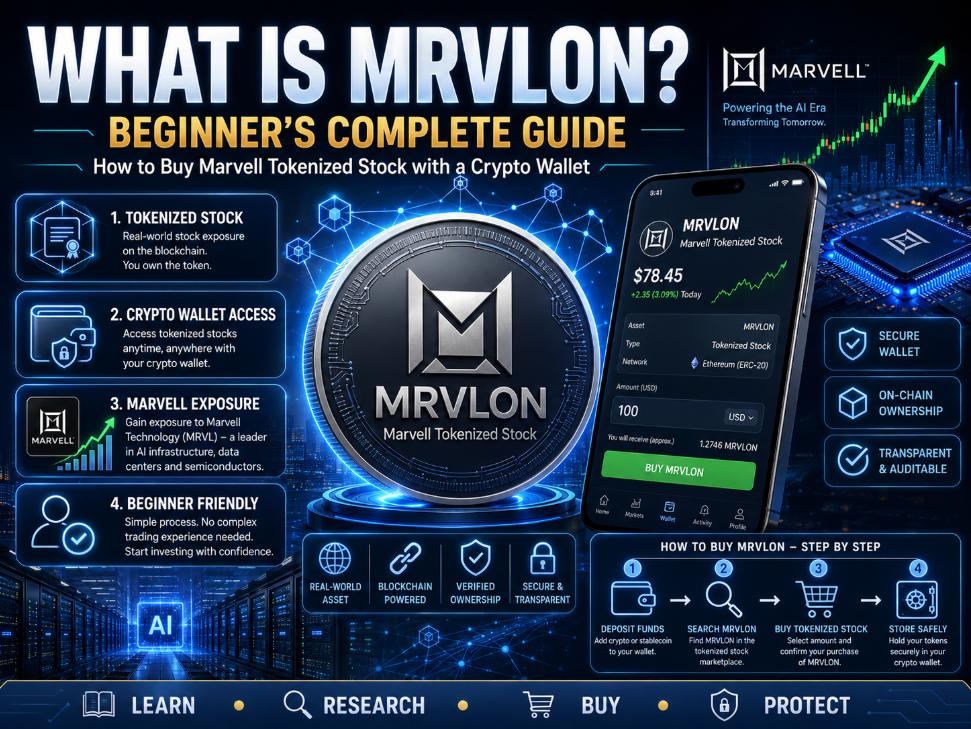
This article will explain everything from scratch: what LRCXON is, how it differs from LRC, how tokenized stocks work, why Ondo Finance is important, and how beginners can find and buy LRCXON on HiBT.
I. What Exactly is the "LRCXON" You Are Seeing?
1. LRCXON ≠ LRC: Do Not Confuse the Two Assets
Many beginners mix up LRCXON and LRC when they first search for it.
The reason is simple: LRC is the token ticker for Loopring, and LRCXON starts with the same three letters. If you only type "LRC" into search engines or exchange search bars, Loopring-related content will pop up.
However, these two are completely different assets:
- LRC: The protocol token for Loopring, primarily related to Ethereum Layer 2, DEXs, payments, and on-chain trading infrastructure.
- LRCXON: Lam Research Tokenized Stock (Ondo), which tracks the stock performance of the US-listed Lam Research Corporation.
Simply put:
- LRC: Crypto-native project token.
- LRCXON: On-chain tokenized version of US stock Lam Research.
- LRCX: Lam Research's actual Nasdaq stock ticker.
This is the first thing beginners must understand: LRCXON is not Loopring. Do not buy it by mistake just because the names are similar.
If you want to understand the investment logic of traditional crypto assets, you can read HiBT's LTC Investment and Market Analysis. Comparing a veteran cryptocurrency like LTC with a tokenized stock like LRCXON makes it much easier to grasp the differences between crypto asset classes.
2. What is the Full Name of LRCXON?
LRCXON stands for: Lam Research Tokenized Stock (Ondo)
Breaking it down:
- Lam Research: A US semiconductor equipment company.
- Tokenized Stock: A stock represented as a token.
- Ondo: The RWA protocol that issues and operates this product.
LRCXON is not a stock token issued directly by Lam Research. Instead, Ondo Finance uses a compliant structure to wrap the economic exposure of Lam Research stock into an on-chain token. This allows qualified users to gain asset exposure similar to the stock's price performance via the blockchain.
Crucial Concept: Tokenized stocks are generally not the "stock itself" in the traditional sense, but on-chain certificates tracking the stock's price and related economic rights. Buying LRCXON does not mean you hold LRCX stock in a brokerage account.
3. What Kind of Company is Lam Research?
Lam Research Corporation is a pivotal company in the global semiconductor equipment industry, providing wafer fabrication equipment and services to chipmakers.
Chips (whether for phones, AI servers, or storage) require incredibly complex manufacturing equipment. Lam Research is one of the core equipment suppliers in this supply chain.
Its importance lies in three areas:
- It serves critical steps in semiconductor manufacturing, enabling the production of smaller, more complex, and higher-performing chips.
- It is highly correlated with the AI chip cycle. Expanding advanced chip capacity drives demand for semiconductor equipment.
- It acts as a "picks and shovels" provider in the US tech supply chain—providing the tools for chip manufacturing rather than designing the chips themselves.
4. Why Does the Ticker End with "ON"?
The "ON" in LRCXON is the naming convention for Ondo's series of tokenized stocks.
In Ondo's ecosystem, different US stocks or ETFs are named similarly (the original ticker + Ondo suffix) to distinguish them from traditional stocks.
II. What is the Tokenized Stock Track?
1. What is RWA?
RWA stands for Real World Assets. It refers to mapping, issuing, trading, or settling real-world assets on the blockchain. Common RWA types include:
- Tokenized US Treasuries
- Tokenized Money Market Funds
- Tokenized Gold / Real Estate / Private Credit
- Tokenized Stocks and ETFs
LRCXON falls under the Tokenized Stock category.
Historically, the crypto space focused on native assets like BTC, ETH, LTC, DOT, and SOL. Their value stems from blockchain networks, consensus, and application ecosystems. RWA is different: its core logic is to bring real-world financial assets on-chain, giving crypto users access to traditional financial yields.
If you are unfamiliar with public chain ecosystem assets, read What is DOT? DOT is a public chain asset, while LRCXON is an RWA tokenized stock—representing completely different directions.
2. Traditional Stocks vs. Tokenized Stocks
- Trading Entry: Traditional stocks rely on brokerage accounts. Tokenized stocks rely on crypto wallets or crypto exchanges.
- Trading Hours: Traditional stocks have fixed hours. Tokenized stocks can often support extended or 24/7 trading (though actual liquidity depends on market depth).
- Asset Rights: Holding actual stock grants shareholder rights (dividends, voting). Tokenized stocks typically provide economic exposure and do not necessarily grant direct shareholder rights.
- Regulatory Framework: Traditional stock regulation is mature. Tokenized stocks operate in a rapidly evolving, cross-border regulatory gray area.
3. What Does This Mean for Ordinary Investors?
- Lower barriers to entry: Allows users to gain US stock exposure using stablecoins without complex fiat conversions or overseas brokerage accounts.
- Crypto-native trading habits: Settles via USDT, wallets, and blockchain transfers.
- Global access: Theoretically allows compliant on-chain users global access to US markets.
- DeFi Composability: In the future, tokenized stocks could be used for on-chain lending, collateral, or structured yield products.
- Warning: Greater utility brings more complex risks (traditional stock risk + crypto risk + issuer risk + compliance risk).
4. Ondo Finance's Position in the RWA Track
Ondo Finance is a leading RWA protocol focused on bringing institutional-grade financial products on-chain. Ondo isn't just launching a token with a story; it is building the infrastructure to put traditional finance on the blockchain, involving compliant structures, asset mapping, and bringing traditional custody and governance mechanisms on-chain.
III. The Issuer: Why is Ondo Finance Credible?
1. Scale Does Not Equal Absolute Safety
Ondo Finance has high visibility and TVL (Total Value Locked) in the RWA market. However, in crypto, scale simply means the project is widely used; it does not mean it is risk-free. You must evaluate whether the underlying assets exist, if the legal structure is transparent, and how liquidity functions.
2. How Should You Understand "1:1 Backing"?
Tokenized stocks often claim to be "backed 1:1 by real stock."
Misconception: This does not mean you hold the stock.
Reality: The issuer (or a related structure) holds the underlying stock, securities, cash, or derivatives to ensure the on-chain token tracks the stock's value as closely as possible. You are holding a structured certificate representing economic rights.
3. SPVs, Brokers, and Legal Wrappers
Issuing tokenized stocks involves a complex structure:
- Special Purpose Vehicles (SPVs)
- Regulated custodians or brokers
- Legal documents and investor qualifications
- KYC/AML checks and regional sales restrictions
- For users, this means LRCXON is not a freely circulating altcoin, but a financial product with legal boundaries. Users in certain jurisdictions (e.g., the US) may be restricted from purchasing it.
4. What Does the Ondo & Broadridge Partnership Mean?
In 2026, Ondo partnered with fintech firm Broadridge to introduce proxy voting and regulatory document access for tokenized stock holders. This is a massive step. It bridges the gap between simply having "price exposure" and actually experiencing traditional shareholder rights on-chain, moving tokenized stocks toward becoming complete on-chain securities infrastructure.
IV. What Makes LRCXON Special?
1. The Underlying Asset: A Semiconductor Heavyweight
LRCXON is backed by Lam Research. It is not consumer tech; it is semiconductor manufacturing equipment. It benefits from long-term trends like AI chip demand, data center expansion, and global fab capital expenditures. Its narrative is a unique blend of "Semiconductors + AI + US Tech Supply Chain + RWA."
2. Advantages of LRCXON
- Flexible trading hours: Less restricted by standard US market hours.
- Lower barriers: Uses stablecoins, bypassing complex fiat onboarding.
- Portfolio diversification: Allows crypto natives to diversify into US tech.
- Educational RWA proxy: A great case study for understanding how assets move on-chain.
3. Limitations of LRCXON
- Not direct stock ownership.
- Different shareholder rights: Rights depend entirely on the issuer's terms.
- Liquidity can be poor: Market depth across different platforms can vary wildly, leading to high slippage on large orders.
- High regulatory uncertainty: Caught between traditional securities law and crypto regulation.
4. How to View Current Liquidity
Never look only at the price. Look at the 24-hour volume, order book depth, circulating supply, and market cap. If a token shows a high price but the order book is razor-thin, a large market order could cause massive slippage.
Beginner Tip: Observe the order book first, test with small amounts, use limit orders, and never use all your capital on a single niche asset.
V. Practical Guide: How to Buy LRCXON on HiBT
(Note: Platform features may change; please refer to the current HiBT interface for actual operations.)
5.1 Understanding HiBT
HiBT is a global digital asset trading platform supporting mainstream crypto assets (BTC, ETH, USDT) and various altcoins. When choosing an exchange, ensure it supports users in your region, requires KYC, has good liquidity, and utilizes strong security measures (like cold wallets and 2FA).
5.2 Registering an Account
- Go to the official HiBT website or App (beware of phishing links).
- Register via email or phone and set a strong password.
- Complete email/SMS verification.
- Crucial: Set up your fund password and security verifications (like Google Authenticator) immediately.
5.3 Completing KYC
Because tokenized stocks relate to securities, platforms require strict KYC (Know Your Customer) compliance. Prepare your ID/Passport, facial recognition, and proof of address. Note: Even if you can register on the exchange, your specific jurisdiction might still restrict you from trading tokenized stocks.
5.4 Depositing USDT
HiBT primarily supports crypto deposits.
- Go to Assets -> Deposit -> USDT.
- Select the correct network (e.g., TRC20, ERC20, BEP20).
- Copy the address and initiate the transfer from your external wallet/exchange.
- Warning: Mixing up networks (e.g., sending ERC20 to a TRC20 address) will result in a loss of funds.
5.5 Searching and Buying LRCXON
- Go to Trading -> Search "LRCXON".
- Enter the trading pair (LRCXON/USDT).
- Observe the price, 24h volume, and order book.
- Choose between a Market Order or Limit Order.
5.6 Market Orders vs. Limit Orders
- Market Order: Executes immediately at the best available price. (High risk of slippage if liquidity is low).
- Limit Order: You set the exact price you are willing to pay. (May not execute if the market doesn't reach your price).
- For niche assets like LRCXON, beginners are strongly advised to use Limit Orders to control entry prices.
5.7 Post-Purchase & Security
- Check your Spot Account to confirm your holdings.
- Record your purchase price, rationale, and maximum loss tolerance.
- If supported, you can withdraw LRCXON to a Web3 wallet (like MetaMask). Always verify the supported chain and do a small test transaction first.
- Always enable 2FA. The biggest risk for beginners is not market crashes, but account theft via phishing or fake customer service.
VI. Risks You Must Understand Before Investing
1. Liquidity Risk
LRCXON does not have the deep liquidity of BTC or ETH. Low liquidity means you might struggle to buy at your desired price, or worse, struggle to sell when you want to exit.
2. Price Volatility Risk
You face dual volatility: the traditional stock market (if Lam Research misses earnings or the semiconductor sector dumps, LRCXON falls) AND the crypto market (if crypto sentiment turns bearish, secondary market liquidity for RWA tokens can dry up).
3. Regulatory Risk
Tokenized stocks are heavily scrutinized. Depending on your jurisdiction (e.g., Mainland China, US, Singapore, Hong Kong), trading these products may carry high compliance risks. Always ensure you are legally permitted to trade them.
4. Platform Risk
Centralized exchanges carry platform risks: withdrawal suspensions, delistings, system maintenance, or hacks. Do not keep all your assets on a single platform long-term.
5. Smart Contract Risk
Because LRCXON is an on-chain token, it relies on smart contracts. Even if the underlying stock is real, vulnerabilities in the contract, oracle failures, or cross-chain bridge hacks can result in total loss.
VII. LRCXON vs. Other Investments: Who is it for?
1. Who should buy LRCX stock directly?
If you have access to a US brokerage, value clear legal shareholder rights, require high liquidity, and prefer mature regulation, buy the stock directly.
2. Who should buy LRCXON?
Users who are already familiar with USDT/crypto, want exposure to US tech stocks, believe in the future of RWA, can tolerate low liquidity, and understand they are buying a tokenized derivative rather than direct stock.
3. LRCXON vs. NVDAon, AAPLon
- NVDAon: AI chip leader.
- AAPLon: Consumer electronics ecosystem.
- LRCXON: Semiconductor equipment and chip manufacturing infrastructure.
- Choose based on the specific sector cycle you want to bet on.
4. Who should NOT buy LRCXON?
- People who cannot tolerate low liquidity and slippage.
- People who want traditional voting rights and direct cash dividends.
- People who think LRCXON is literally LRCX stock.
- People looking for a short-term "get rich quick" meme coin pump.
VIII. 3-Minute Quick Summary
- LRCXON is the Lam Research Tokenized Stock launched by Ondo Finance.
- It is not LRC (Loopring).
- It belongs to the RWA (Real World Assets) track.
- It provides qualified crypto users with exposure to the US tech sector using on-chain infrastructure.
- Advantages: Lower entry barriers, flexible trading, crypto-native settlement.
- Risks: Complex liquidity, regulatory gray areas, platform/smart contract risks, and lack of direct shareholder rights.
IX. Pre-entry Self-Checklist
Ask yourself these 5 questions before buying LRCXON:
- Do I understand that LRCXON and LRC are completely different assets?
- Do I understand that holding LRCXON does not mean I directly hold LRCX stock?
- Am I comfortable with the potential for low liquidity and price slippage?
- Am I aware of the compliance and regulatory risks in my jurisdiction?
- Am I only investing a small amount of money that I can afford to lose entirely?
X. Extended Reading & Learning Path
If you are new to crypto, follow this learning path:
- Understand mainstream crypto assets: Learn about native assets like BTC, ETH, LTC, and DOT. (Read: LTC Analysis and DOT Intro).
- Understand RWA: Learn why tokenized treasuries, stocks, and funds are attracting institutional attention.
- Research Ondo Finance: Check their official documents to understand how tokenized stocks are structured.
- Observe the Market: Watch LRCXON's real-time order books, volume, and cross-platform price differences.
- Test Small: Once comfortable with local laws and platform mechanics, execute a tiny test deposit, trade, and withdrawal.
Conclusion: LRCXON is a New Opportunity, Not a Risk-Free Shortcut
LRCXON represents the crypto market entering a new phase where real-world assets merge with blockchain technology. It allows crypto users to access traditional financial assets in a familiar way. However, emerging assets carry layered risks.
For beginners, the best approach is not to FOMO (Fear Of Missing Out) in, nor to completely avoid it, but to: Understand first, observe second; start small, then decide; control risks first, seek profits second.
Disclaimer: This article does not constitute investment, legal, tax, or financial advice. Crypto assets and tokenized stocks carry high risks. Investors should make independent judgments based on their risk tolerance and comply with local laws and regulations. Market data and platform features are subject to change; please refer to official platforms and issuers for the latest information.