
This article is for informational research and risk education purposes only and does not constitute investment advice. CASHCAT is a highly volatile meme coin; prices, liquidity, trading depth, and platform rules may change at any time. Readers should verify all data against real-time displays on CoinGecko, DEX Screener, OpenSea, Robinhood Chain block explorer, and Hibt before taking any action.
I. What Is CASHCAT, and What Is Its Real Relationship with Robinhood Chain?
Many newcomers seeing CASHCAT for the first time tend to assume it is an "official Robinhood meme coin." This is the first misconception this article aims to clarify: CASHCAT is a meme token deployed on Robinhood Chain, but there is currently no public evidence that it is an official Robinhood Stock Token or an official Robinhood investment product.
CASHCAT's contract address is:
0x020bfC650A365f8BB26819deAAbF3E21291018b4
According to Hibt's listing announcement, the block explorer link provided by the CASHCAT project team points to this exact contract on Robinhood Chain Blockscout, while the trading pair launched on Hibt is CASHCAT/USDT, with trading commencing at 08:00 UTC on July 8, 2026.
1. What Is the Relationship Between CASHCAT and Robinhood Official?
Robinhood Chain official documentation states that Robinhood Chain is an Arbitrum Layer-2 built on top of Ethereum, with Chain ID 4663 and ETH as the native gas token. Robinhood's official page also defines it as a Layer 2 blockchain targeting financial services and real-world assets (RWA).
But here is the crucial point: Robinhood's official contract documentation explicitly warns that when identifying an official Robinhood Stock Token, you must verify against the official contract address; even if a token shares the same name or ticker, a different contract address means it is not an official Stock Token. Currently, the official contracts page lists WETH, USDG, and some Stock Token contracts. CASHCAT is not in the official Stock Token list.
Therefore, a more accurate statement is:
CASHCAT is a community meme coin within the Robinhood Chain ecosystem, not a Robinhood official stock token, nor should it be understood as a Robinhood-endorsed investment product.
2. Why Does the Name "Cash Cat" Have Narrative Value?
The core story of CASHCAT comes from a community narrative about "Robinhood's early name." According to its OpenSea page, Cash Cat is built around a niche story from Robinhood's early history: before finally settling on the name Robinhood, the founding team reportedly considered the name "Cash Cat." DEX Screener also shows its community tagline as "Robinhood original name was Cash Cat."
This is why some traders call it the "flagship meme coin" of Robinhood Chain: it didn't gain traction through technological innovation, but through a convergence of short-term narratives—"new Robinhood Chain + Robinhood early naming story + cat-themed meme + social media virality."
But newcomers must understand: a strong meme coin narrative does not equal strong project fundamentals; high community hype does not equal low risk.
3. How to Verify CASHCAT's Supply, Circulating Supply, and Market Cap?
As of this article's verification, CoinGecko shows CASHCAT circulating supply at approximately 990 million, with total supply assumed at 1 billion, market cap around $91.93 million, and FDV around $91.93 million. OpenSea shows FDV around $99.1 million, approximately 10,143 holder addresses, 24-hour trading volume around $93 million, and labels total supply as 1B CASHCAT.
Newcomers can verify independently as follows:
Open CoinGecko and search for Cash Cat to confirm the contract address is 0x020bfc...18b4; then open Robinhood Chain Blockscout to verify the total supply, holder count, and transfer history of that contract; finally compare trading volume and liquidity in the primary pool on DEX Screener or GeckoTerminal. Relying on a single platform is not enough, because new chains and new tokens often experience data sync delays, price methodology discrepancies, and FDV calculation deviations early on.
4. Robinhood Chain Is Brand-New—What Does That Mean for CASHCAT?
Alchemy announced support for Robinhood Chain mainnet on July 1, 2026, describing it as an EVM-compatible Layer 2 based on Arbitrum Orbit technology, targeting traditional markets, crypto, and RWA. This means Robinhood Chain's foundational narrative is strong: it is backed by the Robinhood brand and oriented toward tokenized stocks, RWA, on-chain finance, and 24/7 trading.
But for a meme coin like CASHCAT, a new chain ecosystem also means three things:
First, early attention premiums are large, making short-term parabolic moves more likely.
Second, ecosystem tooling, audit coverage, cross-chain depth, and stablecoin liquidity are still immature.
Third, the price discovery phase is easily dominated by a small number of whales, KOLs, bots, and short-term capital.
Therefore, CASHCAT's opportunity comes from "early new-chain narrative," and its risk comes from the exact same source: "early new-chain immaturity."
II. Behind CASHCAT's 14-Day 900x Data: Is the Liquidity Actually Healthy?
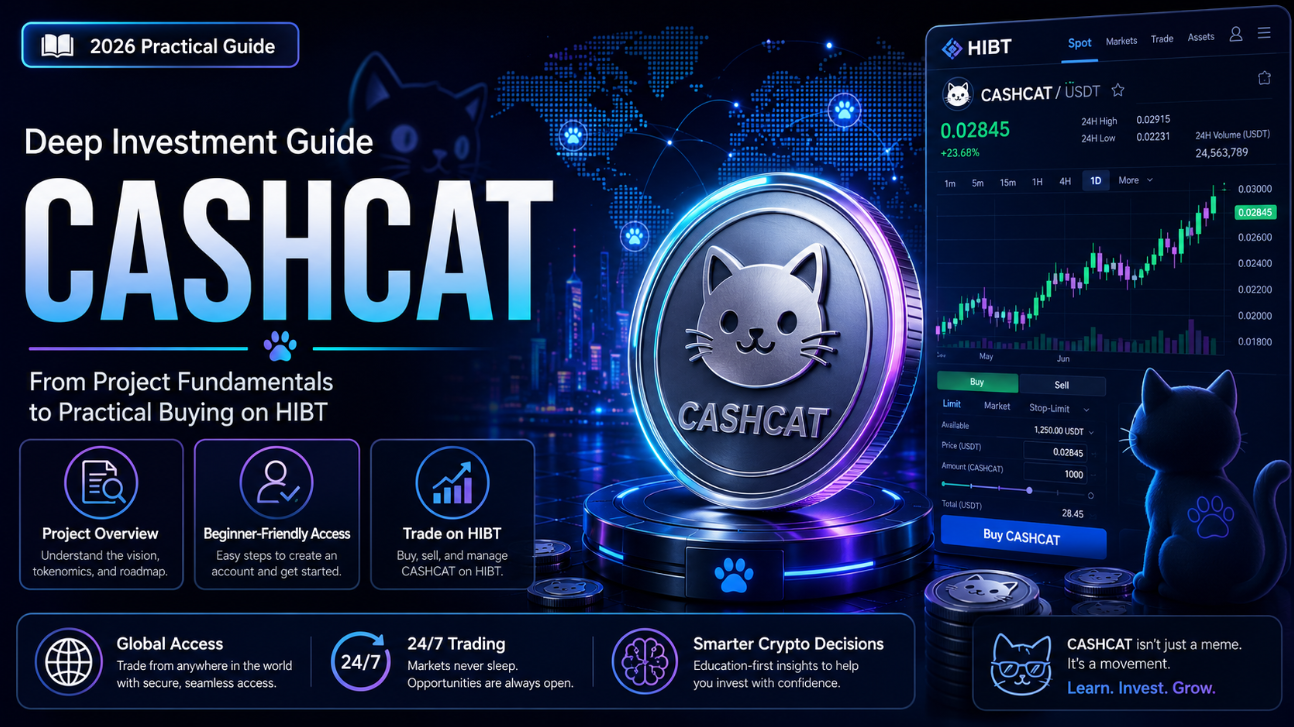
The most eye-catching aspect of CASHCAT is its extreme price appreciation in a very short time. Public reports state that Cash Cat rose over 1,400% in 24 hours, hitting a high near $0.1418 before pulling back to around $0.1202, while its 7-day gain was reported at 5,530%. Binance Square cited on-chain data that an early address bought 15.04 million CASHCAT for roughly $838, later sold part of the position, and realized over $917,000 in profit—an overall return of approximately 1,253x.
These numbers are thrilling, but newcomers most easily overlook one core question:
Gains are historical outcomes; liquidity determines whether you can actually buy or sell anywhere near the displayed price.
1. High Trading Volume Does Not Equal Low Risk
CoinGecko showed CASHCAT's 24-hour trading volume exceeding $100 million at one point, with the primary market being CASHCAT/WETH on Uniswap V3 (Robinhood). DEX Screener showed the main pool's liquidity at approximately $5.9 million, FDV/market cap around $95.7 million, and 24-hour trading volume around $96.4 million.
On the surface, volume looks very active. But let's break it down:
High volume indicates intense short-term turnover;
A liquidity pool of only a few million dollars means large orders can still cause significant slippage;
An FDV approaching $100 million means the market has already assigned a very high valuation to this meme narrative;
If subsequent hype fades, volume could shrink rapidly, and the selling experience will be completely different from the rally phase.
2. High Turnover—Opportunity or Danger?
If we calculate using a market cap of roughly $90–100 million and a 24-hour trading volume of roughly $90–100 million, CASHCAT's 24-hour turnover/market cap ratio is close to or even exceeds 100%. This means it is not a quiet hold-and-wait asset, but a highly speculative short-term trading asset.
High turnover has two sides:
On the positive side, there is enough short-term trading activity to make matching buys and sells easier.
On the negative side, a large portion of trading may come from short-term arbitrage, bots, KOL-driven FOMO, and early profit-taking. Once hype fades, volume will decline sooner than price.
For newcomers, the most dangerous trap is treating "paper market cap" as "realizable wealth." If a wallet shows $1 million worth of CASHCAT, but the main pool doesn't have enough depth to absorb a full exit, that $1 million is just a number on the screen—not USDT in your pocket.
3. Is the Liquidity Pool Locked?
DEX Screener and GeckoTerminal can display liquidity pool size, pool address, trading volume, number of buy/sell transactions, and more. GeckoTerminal shows CASHCAT/WETH main pool liquidity at approximately $6.03 million, with roughly 44.63 million CASHCAT and approximately 935.95 WETH in the pool.
But note: visible liquidity does not equal locked liquidity.
Locking typically requires evidence of a third-party locker, lock NFT, lock contract, or official announcement. Without clear proof of lockup, retail traders should assume LP withdrawal risk exists. For meme coins, once core liquidity is pulled, price can lose support in a matter of minutes, and selling slippage can spike dramatically.
4. Compared to Mature Projects, Where Is CASHCAT in Its Lifecycle?
Mature projects typically have longer on-chain history, deeper exchange listings, more stable holder structures, and clearer product or protocol revenue. For example, you can learn about the pricing logic of tokenized stock assets by reading What is QCOMB, or compare the ecosystem cycle, historical volatility, and community depth of established public chain projects by reading What is XEM.
CASHCAT currently resembles an "early new-chain meme asset." Its core risk-reward profile does not come from cash flow, protocol revenue, or long-term technical moats, but from attention, narrative, community propagation, and trading heat.
This type of asset is not untradeable, but it cannot be understood using the valuation logic of mature assets.
III. Unverified Contract, No Audit, Missing Tools: 5 Real Risk Signals for CASHCAT
Before investing in CASHCAT, newcomers should not ask "Can it still go up?" but rather: "What is the worst that could happen?"
Risk Signal #1: Contract Verification and Permission Information Require Careful Review
For ordinary investors, whether a contract is verified means whether outsiders can more easily read the source code, check permission functions, tax logic, blacklist logic, mint permissions, and trading restrictions. An unverified contract does not necessarily equal a scam, but it significantly increases information opacity.
The self-check process is straightforward:
Open Robinhood Chain Blockscout;
Paste the CASHCAT contract address 0x020bfC650A365f8BB26819deAAbF3E21291018b4;
Check whether the Contract page shows source code verification;
Check whether Read/Write Contract is readable;
Check for sensitive functions such as owner, mint, pause, blacklist, setTax, setRouter;
Then check the Holders page, filter out LP addresses and exchange addresses, and observe the concentration of the top 10 / top 20 wallets.
Risk Signal #2: Honeypot Risk Cannot Be Judged by a Single Tool Alone
In the meme coin context, a honeypot usually refers to a contract trap where you can buy but selling is restricted. It may use blacklists, trading taxes, sell restrictions, transfer restrictions, or dynamically adjusted tax rates to make it difficult for ordinary retail traders to exit.
DEX Screener's Quick Intel page showed CASHCAT as "No issues" at the time, but the page also cautioned that automated audits are not 100% accurate. This warning is critical: tools can only serve as a first screen, not a substitute for manual review.
More problematically, Robinhood Chain is a new chain, and many traditional meme security tools do not yet have full coverage for Chain ID 4663. Token Sniffer's publicly supported network list includes Ethereum, Base, BNB Chain, Arbitrum, Polygon, and others, but does not show Robinhood Chain. This means newcomers cannot fully rely on familiar security scoring sites and must rely more on block explorers, actual small test transactions, contract permission reviews, and holder address analysis.
Risk Signal #3: Early Buyers Hold Massive Unrealized Gains, Late Entrants Naturally Absorb Sell Pressure
Early addresses sitting on thousand-x unrealized gains are the strongest marketing material—and also the most real potential source of sell pressure. An early wallet that turned a few hundred dollars into hundreds of thousands or even millions of dollars has a completely different risk appetite from a late retail entrant. For the early buyer, even an 80% price drop could still mean massive profits; for someone who bought near the top, a 50% drop could cause serious losses.
So don't just look at "some address made 1,000x"; also ask:
How much does it still hold unsold?
Is it distributed across multiple wallets?
How many similar early wallets exist?
Is selling concentrated during price spikes?
Are large transfers to CEXs or routing contracts increasing?
Risk Signal #4: In the Absence of Audit and Lockup Proof, Treat as High-Risk Meme
In the eyes of professional traders, a project that simultaneously meets the following conditions is usually not classified as a "sound investment":
New chain;
New token;
No public audit;
No clear lockup proof;
Opaque contract permissions;
Massive early wallet unrealized gains;
Primary rally driven by social propagation and narrative heat.
This doesn't mean it will necessarily go to zero, but it does mean it belongs in a "high-risk speculative allocation," not a long-term core position.
Risk Signal #5: Robinhood Chain Ecosystem Is Still Early
Robinhood Chain's infrastructure direction is strong, but common early-stage new-chain issues include: limited cross-chain paths, RPC instability, explorer indexing delays, insufficient security tool coverage, lack of user education, concentrated DEX depth, and inconsistent price methodologies.
CASHCAT's risks come not only from the token itself, but also from the early stage of the ecosystem it lives in.
IV. Step-by-Step Tutorial: How to Register, Deposit, and Trade CASHCAT on Hibt
If you prefer not to use on-chain wallets, bridging, and DEXs directly, and instead want to complete spot trades through a centralized exchange, you can follow CASHCAT's CASHCAT quotes and trading page on Hibt. Hibt's official announcement confirms that the CASHCAT/USDT trading pair is live, with trading starting at 08:00 UTC on July 8, 2026; deposit and withdrawal times are marked as TBD in the announcement.
1. Register a Hibt Account and Complete KYC
The general process is as follows:
Go to the Hibt website or App;
Register using email or phone number;
Set a login password;
Enable two-factor authentication;
Go to Account Center and find Identity Verification or KYC;
Select country/region of residence and ID type;
Upload a government-issued ID such as passport, national ID, or driver's license;
Complete liveness verification as required by the page;
Wait for review results.
Hibt's Help Center states that KYC typically requires identity verification and may ask for government ID, driver's license, or passport, and may also involve address and identity confirmation; some account functions may be restricted before KYC is completed. Hibt's KYC guide also notes that common documents include national ID, passport, and driver's license, and may require facial recognition or liveness detection.
Mainland China users should pay special attention: service regions, KYC policies, and regulatory requirements of different trading platforms may change at any time. Do not use false identities, do not circumvent platform restrictions, and do not assume that being able to access a platform equals legal permission in your jurisdiction. For fiat on-ramp, off-ramp, tax, and compliance matters, confirm local legal requirements independently.
2. How to Deposit Funds via USDT?
For newcomers, the most common path is to first hold USDT, then deposit USDT to Hibt.
The steps are usually:
Go to the Assets page;
Select "Deposit";
Search for USDT;
Select a network, such as TRC20, ERC20, BEP20, or another network supported by the platform;
Copy the deposit address;
Transfer from another wallet or exchange;
Wait for on-chain confirmation and platform crediting.
The most important thing here is network consistency. If you select USDT-TRC20 on Hibt, you must send from the external platform using the TRC20 network; if you select the wrong network, funds may not arrive automatically and could even be lost.
Fiat deposits depend on whether Hibt currently offers bank card, third-party payment, P2P, or buy-crypto channels. Supported methods and arrival times vary by region. Newcomers should not randomly seek unfamiliar OTC merchants for speed, and especially should not transfer money privately via chat apps to buy crypto.
3. How to Search for the CASHCAT/USDT Trading Pair?
After completing your deposit, go to the spot trading page and search for CASHCAT or CASHCAT/USDT. Hibt's listing announcement confirms this trading pair as CASHCAT/USDT.
The buy interface typically has three core fields:
Price: How much USDT you are willing to pay for 1 CASHCAT.
Amount: How many CASHCAT you want to buy.
Total: Approximately how much USDT this order will cost.
If you input price and amount, the system will automatically calculate total; if you input total, the system will usually estimate the buyable amount based on current price.
4. How to Choose Between Limit Orders and Market Orders?
For a highly volatile meme coin like CASHCAT, newcomers should not blindly use market orders. Market orders will eat into existing orders on the order book immediately, and during sharp price swings or insufficient depth, the actual fill price can be far worse than what you see.
A more prudent approach is:
Small test orders;
Prioritize limit orders;
Split your entries, don't go all-in at once;
Before executing, check the bid-ask spread;
If using market orders, only use a very small amount to test.
In a DEX context, slippage tolerance is commonly set between 0.5%–3%, but during extreme meme coin volatility you may need higher slippage to get filled. The problem is: the higher the slippage, the greater the risk of unfavorable execution. So newcomers trading on Hibt's spot page should focus more on order book depth and limit order execution, rather than chasing "buying immediately."
5. How to Check Positions, Sell, and Withdraw After Buying?
After buying, go to the Assets page or Spot Account to view your CASHCAT position. When selling, select CASHCAT/USDT, switch to the sell side, input your sell price and quantity, and after execution you will receive USDT.
If you want to withdraw USDT:
Go to the Assets page;
Select USDT;
Click Withdraw;
Select withdrawal network;
Enter external wallet address;
Verify fees, minimum withdrawal amount, and destination network;
Complete security verification.
Hibt's spot fee page shows that the platform charges 0.2% for both Maker and Taker spot fees, with a minimum order size around 5 USDT, but please refer to the actual page display. For real-time withdrawal fees, minimum withdrawal amounts, and open status for CASHCAT or USDT, please refer to Hibt's asset withdrawal page; Hibt's CASHCAT listing announcement still marks deposit and withdrawal times as TBD, meaning these statuses may be updated dynamically.
6. Should You Participate in Hibt's "Trade CASHCAT – Share 4,000 Reward Pool" Event?
Hibt's announcement states that the "Trade CASHCAT – Share a 4,000 Reward Pool" event runs from 08:00 UTC on July 8, 2026 to 16:00 UTC on July 11, 2026. During the event, users with a cumulative CASHCAT/USDT trading volume of 200 USDT can receive 35 CASHCAT + 2 USDT in loss protection vouchers; additionally, the top 10 users by trading volume will share a 500 USDT Futures bonus.
Newcomers should remember: do not trade high-risk assets just for event rewards.
If you were already planning to research CASHCAT with a small amount, the event can be seen as an extra bonus; but if you are forcing trades just to earn a few dozen CASHCAT or a voucher, you can easily lose more principal to slippage, fees, and FOMO-driven chasing.
V. CASHCAT Price Trends and Prediction References: Is Now a Good Time to Enter?
This question cannot be answered with a simple "yes" or "no." For a newly explosive meme coin like CASHCAT, technical analysis has reference value, but it cannot be treated as a deterministic forecast.
1. How Should You Read RSI, MACD, and MA?
Because CASHCAT's main pool was created very recently, DEX Screener shows the relevant trading pair has been active for about 21 days. This means daily-level RSI, MACD, and MA samples are insufficient, and many traditional indicators will be distorted.
It is more appropriate to observe 15-minute, 1-hour, and 4-hour timeframes:
If RSI stays consistently above 70, it indicates short-term overheating, but strong meme coins can remain overbought.
If MACD shows a bearish crossover at highs, it indicates weakening short-term momentum, but does not guarantee a reversal.
If price drops below short-period moving averages and fails to reclaim them on a retest, it suggests chasing capital may be retreating.
If price deviates too far from moving averages, short-term pullback risk increases.
For newcomers, volume is more important than indicators. TradingView, citing Invezz, noted that after CASHCAT's spike, the market is watching support near $0.115, resistance at the previous high of $0.134–$0.1418, and whether volume can remain elevated.
2. Key Support and Resistance Levels
According to public market reports, short-term key levels can be understood as follows:
Near $0.1418: Previous high area, also a short-term sentiment resistance zone.\ $0.134–$0.1418: If broken with volume, it may enter a new price discovery phase.\ Near $0.115: Short-term support the market is watching after the spike.
Near $0.10: If $0.11 is broken, the next support area the market may watch.
But these levels are not "guaranteed effective" entry or exit points. The most common meme coin pattern is: breakouts attract chasing buyers, breakdowns trigger stop-loss cascades, and price can complete in minutes what takes ordinary people hours to react to.
3. How Much Capital Would CASHCAT Need to Reach Its Next Price Milestone?
Using a rough estimate of 1 billion total supply:
At $0.10, FDV is approximately $100 million;
At $0.20, FDV is approximately $200 million;
At $0.50, FDV is approximately $500 million;
At $1.00, FDV is approximately $1 billion.
But there is an important misconception here: a $100 million increase in market cap does not mean $100 million in real capital inflow. Market price is determined by marginal trades; small amounts of capital can push the price up, and conversely, small-scale selling can cause market cap to evaporate quickly. For low-liquidity meme coins, FDV is an emotion amplifier, not a pool of cashable funds.
4. How to Interpret CASHCAT Price Predictions on Hibt?
You can refer to Hibt's CASHCAT Price Prediction page, combining historical price, market sentiment, trading volume, and technical indicators for auxiliary judgment.
But it must be emphasized: prediction models have significant limitations. CASHCAT has a short listing history, limited samples, and extreme volatility. Any 2026–2027 prediction interval cannot be treated as an investment promise. Models can help you build scenario assumptions, but they cannot bear principal losses on your behalf.
A more reasonable approach is to build three scenarios:
Bear case: Hype fades, volume shrinks, price breaks key support, drawdown exceeds 70%.
Base case: Community hype sustains, price oscillates in a high-volatility range, capital repeatedly battles.
Bull case: Robinhood Chain ecosystem continues to expand, CASHCAT maintains its leading meme status, and gains more CEX or tooling platform support.
You don't need to predict which one will definitely happen; you need to know in advance what you will do when each one happens.
5. How Can On-Chain Whales and Active Addresses Help Your Judgment?
To judge whether CASHCAT still has real demand, observe:
Whether active address count continues to grow;
Whether new holder addresses come from real wallets rather than a few addresses splitting;
Whether large wallets are accumulating, reducing, or transferring to trading platforms;
Whether buy and sell volume in the main pool is balanced;
Whether volume expands when price rises;
Whether consecutive large sells appear when price falls;
Whether social media hype translates into real on-chain transactions.
OpenSea shows CASHCAT holders at approximately 10,143, while DEX Screener shows approximately 8,643 traders in 24 hours, with buy and sell volume roughly balanced. These figures indicate high short-term participation, but they cannot alone prove long-term value. What truly warrants caution is: price making new highs while active addresses decline, or volume declining while whales continue to sell.
VI. If You Decide to Invest in CASHCAT, How Should You Manage Position Size and Mindset?
Assets like CASHCAT are best understood as "high-risk experimental allocations," not "long-term value investment allocations."
1. What Is the Position Size Limit for Meme Coins?
For newcomers, total meme coin allocation is best kept within 5% of overall crypto assets. Even those with higher risk tolerance and more experience should not exceed 10%. This refers to the combined total of all meme coins, not just CASHCAT alone.
If your total capital is 10,000 USDT, your total meme coin position can be kept within 500 USDT; if you don't yet have stable profitable experience, a single CASHCAT position can even be kept within 1%–2%.
The core of position management is not to make you earn less, but to keep you in the market when you are wrong.
2. How to Set Stop-Loss and Take-Profit?
CASHCAT is highly volatile; a traditional 5% stop-loss may be too tight and get swept by random short-term noise. But having no stop-loss at all can turn a small loss into a deep trap.
A more suitable approach is:
Decide your maximum loss amount before buying;
Control risk through position sizing, not by fantasizing about perfect stop-loss levels;
Take profit in tranches, don't wait for the absolute top;
After price doubles, consider recovering your principal first;
Use trailing stops on remaining positions to follow the trend;
When price breaks key support and volume declines, don't replace discipline with "faith."
For example, if you are willing to lose a maximum of 200 USDT on CASHCAT, then no matter how bullish you are, do not commit a position size where the potential loss exceeds 200 USDT.
3. If Price Gets Cut in Half or Goes to Zero, Can You Accept It?
This is a brutal question, but it must be asked in advance:
If CASHCAT drops 50% tomorrow, will I lose sleep?
If it drops 80%, will I be forced to borrow money to add to my position?
If it goes to zero, will my life be affected?
If the answer is "yes," the position is too large.
Meme coins are not untouchable, but they should never be bought with living expenses, borrowed funds, family money, or short-term essential funds.
4. What Else Can You Watch Besides CASHCAT?
If you are bullish on Robinhood Chain but don't want to endure the extreme volatility of a single meme coin, you can observe:
Robinhood Chain official Stock Token ecosystem;
Liquidity of base assets such as WETH and USDG;
On-chain DEX trading volume changes;
Number of RWA-related protocols;
Stablecoin scale changes;
Active address and developer counts;
Whether more mature wallets, lending, derivatives, and data tools emerge in the future.
If you just want to learn about a new chain, you don't necessarily need to go heavy on meme coins. Small-scale exploration, researching on-chain data, and understanding ecosystem structure may yield greater long-term returns than a single FOMO chase.
VII. Final Words: Three Sober Reminders for Crypto Newcomers
1. Someone Else Made 900x—That Doesn't Mean You Can Too
You are seeing survivors, not the full sample. Behind every thousand-x address, there may be numerous late chasers, stop-outs, bag holders, and losing exits. Social media loves to spread "a few hundred dollars turned into millions" stories, but rarely shares the ordinary people who lost 70% after chasing highs.
Survivorship bias is extremely severe in the meme coin market. The more get-rich-quick stories you see on trending searches, group chats, and KOL posts, the more you should lower your expectations—not increase your position size.
2. When Five Conditions Are Met Simultaneously, Veterans Play Defense First
If a project simultaneously has:
New chain;
New token;
No clear audit;
No clear lockup proof;
Massive early whale unrealized gains;
Contract permissions still require further review;
Primary rally driven by social narrative;
Then professional traders typically will not treat it as a stable allocation, but as a high-risk event trade. Event trades can be participated in, but must be small size, fast reaction, strict discipline.
3. Any Price Prediction Is Not Investment Advice
CASHCAT's price may continue to rise, or it may pull back rapidly. This article provides a research framework, not a buy order. You should complete your own DYOR:
Verify the contract;
Verify the trading pair;
Verify the liquidity;
Verify the holder structure;
Verify platform announcements;
Verify your risk tolerance;
Verify compliance with local laws and platform rules.
If you cannot explain why you are buying, and cannot clearly state when you will sell, then you should not rush in just because someone else made money.
FAQ: Common Questions from CASHCAT Newcomers
1. Is CASHCAT an Official Robinhood Coin?
No. More precisely, CASHCAT is a community meme coin deployed on Robinhood Chain. There is currently no public evidence that it is an official Robinhood Stock Token or official Robinhood investment product. Robinhood's official documentation reminds users that identifying official Stock Tokens requires verification against official contract addresses; same name or same ticker does not equal an official asset.
2. What Is CASHCAT's Contract Address?
CASHCAT's contract address is:
0x020bfC650A365f8BB26819deAAbF3E21291018b4
This address is referenced in Hibt's listing announcement and multiple market data pages.
3. What Is CASHCAT's Total Supply?
OpenSea shows CASHCAT total supply as 1B CASHCAT, and CoinGecko shows circulating supply at approximately 990 million. Since new token data updates rapidly, it is recommended to re-verify on CoinGecko, OpenSea, and block explorers before trading.
4. Why Did CASHCAT Suddenly Pump?
The primary drivers are the Robinhood Chain new-chain narrative, the Cash Cat naming story, social media virality, early address wealth-creation cases, and short-term trading capital all pushing together. TradingView, citing reports, noted that CASHCAT's parabolic surge had no clear major protocol upgrade or mainstream exchange catalyst—rather, it was driven primarily by market sentiment and Robinhood Chain hype.
5. Is CASHCAT Still a Buy Right Now?
Whether you should buy depends on your risk tolerance, not on whether others are bullish. If you are a newcomer, it is recommended to research with a very small position only, and do not FOMO all-in. CASHCAT is a highly volatile meme coin; it may continue to rise, or it may pull back rapidly.
6. Is KYC Required to Buy CASHCAT on Hibt?
Hibt's Help Center states that some account functions may be restricted before KYC is completed, and Hibt also mentions that KYC can be used for identity verification, improved account security, and enhanced feature access. Whether KYC is strictly required for deposit, trading, or withdrawal should be confirmed against Hibt's current page prompts.
7. Is Hibt's CASHCAT Event Worth Participating In?
Hibt's event requires a cumulative CASHCAT/USDT trading volume of 200 USDT to qualify for the corresponding rewards, and the reward pool is first-come-first-served. If you were already planning to trade, you can pay attention to it as a side benefit; but it is not recommended to force trades just for the rewards.
8. What Is CASHCAT's Biggest Risk?
The biggest risk is not a single factor, but the compounding of multiple risks: new chain, new token, meme narrative, concentrated liquidity, massive early whale unrealized gains, insufficient security tool coverage, and extreme price volatility. Deterioration in any single factor could trigger a rapid price decline.
About the Author
The author has long followed crypto exchange products, on-chain data, SEO content research, and newcomer investment education. He specializes in breaking down new token investment opportunities and risks from the perspectives of contract addresses, trading depth, platform announcements, technical indicators, and user operational workflows. The goal of this article is not to predict whether CASHCAT will rise or fall, but to help newcomers establish the basic habit of "check risks first, then trade."
Disclaimer
This article is for crypto asset research and information collation purposes only and does not constitute any investment advice, financial advice, legal advice, or tax advice. CASHCAT is a high-risk, highly volatile digital asset; its price may rise or fall sharply in a short period of time, and situations such as liquidity drying up, inability to sell at expected prices, contract risks, platform rule changes, and regulatory restrictions may occur.
All data in this article were verified against publicly available information as of July 9, 2026, and may change subsequently. Readers should independently verify information on CoinGecko, DEX Screener, OpenSea, Robinhood Chain Blockscout, and Hibt official announcements and trading pages before making any trading decisions, and exercise independent judgment based on their own financial situation, risk tolerance, and applicable local laws and regulations.
Please always remember: DYOR, do not invest funds you cannot afford to lose, and do not neglect your principal safety because of others' get-rich-quick stories.