
If you first come across MUUB on a trading platform, a price tracker, or social media, the most common questions are: What exactly is MUUB? Is it just another crypto token? How does it relate to MU, Micron, US-listed ETFs, and RWA?
Simply put, MUUB is not a traditional public-chain coin, a memecoin, a DeFi governance token, or an AI application token. More precisely, MUUB is a bStocks Tokenized Stock linked to the Direxion MU Bull 2X ETF—a tokenized ETF asset. It falls under the Tokenized Stock and RWA (Real World Assets) umbrella. Its core logic isn't “a project launched a new coin,” but rather bringing the price exposure of a traditional financial ETF into the crypto trading environment via a token.
CoinGecko labels MUUB as “Direxion MU Bull 2X ETF (bStocks Tokenized Stock)” and shows it is tradeable on both centralized and decentralized exchanges, with active trading pairs including MUUB/USDT. CoinMarketCap similarly describes it as a tokenized bStock that provides economic exposure to the Direxion MU Bull 2X ETF and, where permitted by applicable law, may involve rights to convert into the underlying security.
So when searching “what is MUUB,” don’t treat it as just another new coin. Instead, understand it within the framework of: US-listed ETF + leveraged ETF + Tokenized Stock + RWA + crypto trading access.
You can check MUUB real-time price, trading data, and market info on Hibt, and also explore the MUUB price prediction page for market trends and forecasting references.
1. What is MUUB and why is it gaining attention?
MUUB’s core identity is a tokenized asset tied to the Direxion MU Bull 2X ETF. It is not a typical crypto project token, but a tokenized representation of a traditional ETF asset entering the crypto space.
To understand MUUB, you first need to understand its underlying reference: MUU. According to Direxion’s official website, MUU is the Direxion Daily MU Bull 2X ETF, which seeks 200% leveraged investment results of the daily performance of Micron Technology, Inc. common stock. SEC filings confirm that this ETF seeks 2x daily leveraged results and explicitly states that it differs significantly from most ordinary ETFs.
In plain terms for newcomers:
- MU = ticker symbol for Micron Technology stock.
- MUU = a 2x daily leveraged ETF that aims to double the daily return of MU.
- MUUB = a bStocks Tokenized Stock asset linked to MUU.
Thus, MUUB’s value isn't driven by a standalone project’s ecosystem growth. It depends on a combination of: Micron’s stock performance, MUU’s leveraged ETF mechanics, the RWA issuance structure, crypto market liquidity, and trading demand.
This is precisely why MUUB has drawn attention—it sits at the intersection of several hot trends: semiconductors, AI computing power, memory chips, US-listed ETFs, leveraged products, Tokenized Stocks, and on-chain RWA assets.
2. Is MUUB a regular coin, an application token, or an RWA asset?
Many newcomers search for “MUUB coin,” but strictly speaking, calling it a “regular coin” is inaccurate.
Typical crypto assets fall into a few categories:
- Infrastructure assets like ETH, whose value comes from Ethereum network usage, gas fees, Layer 2 ecosystems, DeFi, stablecoins, and on-chain applications. To understand such assets, you can refer to Hibt’s ETH price prediction.
- Application ecosystem tokens (DeFi, GameFi, AI, Web3 education, storage, etc.), whose value derives from protocol revenue, user growth, governance, or product usage.
- Thematic assets like AI, RWA, Meme, SocialFi, DePIN—often driven by narratives, sentiment, and capital cycles.
MUUB fits best into the third category, specifically the RWA sub-category of Tokenized Stocks / Tokenized ETFs.
It is not:
- An independent blockchain,
- A DeFi governance token,
- An AI application token,
- A memecoin,
- Or a direct holding of Micron stock.
Its accurate positioning is: a traditional financial leveraged ETF asset, brought into crypto via bStocks and Tokenized Stock structures as a tradable asset.
For this type of asset, the key questions aren't “is the community shilling it?” but rather: what is the underlying ETF, how does the leverage work, is the tokenization structure transparent, is there sufficient liquidity, and does the user understand the risks?
3. Why do newcomers often misunderstand MUUB?
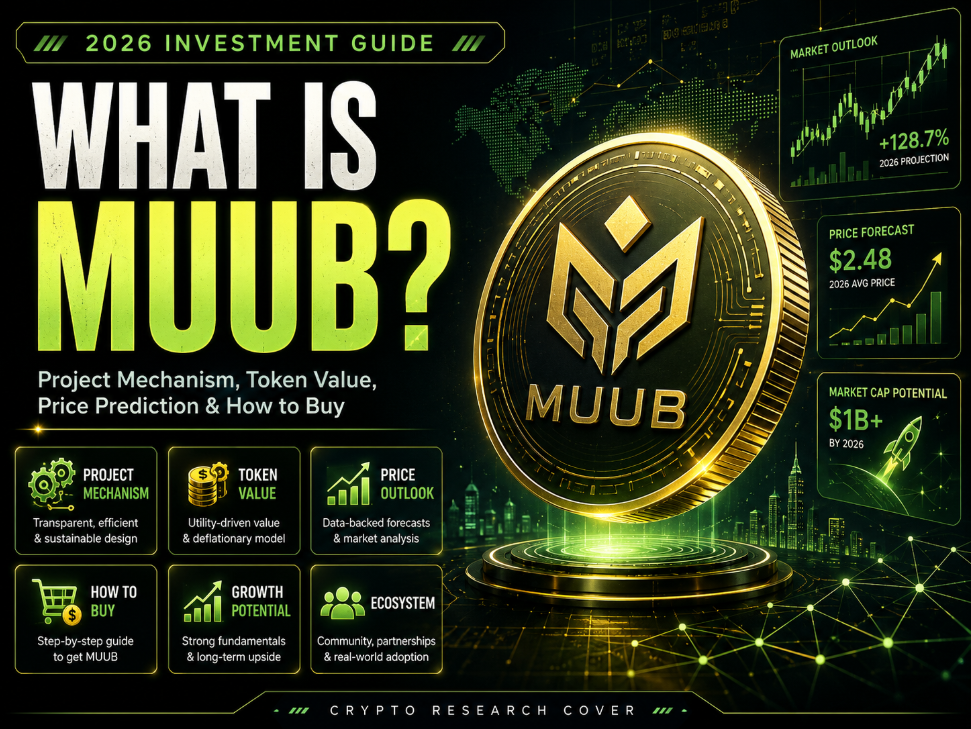
MUUB is most easily misunderstood because it looks like a crypto token, but its underlying logic is not typical crypto.
Many newcomers judge a coin by name, price, gains, trading pairs, and short-term charts. Seeing MUUB/USDT, they assume it behaves like any altcoin—just gauge hype and trends.
But MUUB is different.
It links to the traditional ETF market, and MUU itself is a single-stock leveraged ETF. Direxion explicitly states that MUU seeks 200% daily leveraged results and thus has higher volatility than the underlying MU stock.
This means MUUB stacks at least three layers of volatility:
- Volatility of Micron stock itself.
- Amplified volatility from MUU’s 2x leverage.
- Trading volatility of MUUB as a Tokenized Stock in crypto markets.
So MUUB is more complex than ordinary stocks, regular ETFs, or even standard Tokenized Stocks. It's not a “cheap coin,” nor is it “buying Micron.” Investors must first understand the underlying asset, leverage mechanics, and tokenization structure before considering participation.
This is a key point under Google EEAT: MUUB investment research should not revolve around price hype, but around asset structure, risk mechanisms, and market demand.
4. What problem does MUUB solve? Why does it exist?
MUUB primarily solves the problem of how crypto users can gain exposure to traditional financial assets.
In the past, if you wanted to participate in Micron or semiconductor opportunities, you needed a traditional brokerage account. To access a leveraged ETF like MUU, you’d also need to understand US ETF trading rules, broker permissions, trading hours, and associated risks.
MUUB brings that traditional ETF exposure into the crypto environment. Users can trade with USDT on familiar crypto platforms and access price movements of traditional assets.
Its significance is not in creating a brand-new on-chain protocol, but in bridging traditional finance and crypto.
- User experience: provides a crypto-native entry point.
- Asset class: allows crypto markets to trade not just BTC, ETH, DeFi tokens, and memes, but also US-listed ETFs, stock tokens, and RWA.
- Industry trend: MUUB is part of the broader on-chain tokenization of traditional assets. xStocks describes such assets as “1:1 backed tokenized US stocks and ETFs,” highlighting 24/7 trading and cross-chain usability.
So MUUB’s core value isn't “what can this project token do,” but whether as a Tokenized ETF asset it can offer effective, transparent, and liquid exposure to traditional assets.
5. MUUB’s project mechanics: how is it different from typical token mechanics?
If you analyze a typical crypto project, you’d look at team, roadmap, token utility, governance, ecosystem apps, staking, protocol revenue, and community growth.
But MUUB doesn’t fit that framework because it’s not a typical application token—it’s a Tokenized Stock / Tokenized ETF asset.
Its mechanics are closer to:
- The underlying traditional asset exists first.
- It is mapped via an issuance structure and custody arrangement.
- The issuer generates Tokenized Stocks.
- The token enters the crypto trading environment.
- Users trade MUUB on exchanges.
- Price fluctuates based on underlying asset value, market supply/demand, and liquidity.
Thus, MUUB’s “project mechanics” are essentially asset-mapping mechanics, not blockchain project mechanics.
The value of a typical crypto project usually comes from ecosystem usage demand. MUUB’s value comes primarily from the performance of the underlying MUU ETF, tokenization issuance structure, trading depth, RWA market demand, and crypto capital sentiment.
That’s the key distinction from ordinary tokens.
6. What are the use cases of MUUB?
MUUB’s main utility is to allow users to gain price exposure to the Direxion MU Bull 2X ETF via crypto markets.
It is not used for governance (like DeFi tokens), nor for gas fees (like blockchain native tokens), nor for in-game spending (like GameFi tokens).
MUUB’s core use cases are threefold:
- Trading – Users can trade the MUUB/USDT pair to participate in price movements. If you are bullish on Micron’s short-term performance and understand the risks of a 2x leveraged ETF, MUUB may be of interest.
- Portfolio observation – For those studying RWA and Tokenized Stocks, MUUB is a prime example—not just a plain stock token, but a leveraged ETF tokenization, making it useful to understand how complex traditional products enter crypto.
- Thematic investment – MUUB is tied to Micron, which is linked to memory chips, semiconductors, AI compute, and data centers. Investors often track MUUB as a play on AI hardware, semiconductor cycles, and memory markets.
However, MUUB’s utility does not mean it’s suitable for everyone. It’s better suited for users who understand leveraged ETFs, semiconductor cycles, RWA structures, and crypto liquidity risks.
7. Where does MUUB’s value come from?
MUUB’s value isn't about “low price.” For this type of asset, real value sources include at least five dimensions:
- Underlying asset value – MUUB is tied to MUU, which seeks 2x leveraged results of Micron’s daily performance. Micron’s stock is a primary variable.
- Leveraged ETF mechanics – MUU is a daily 2x ETF, amplifying daily swings and subject to compounding, volatility drag, and holding-period effects.
- RWA issuance structure – As a Tokenized Stock, you need to assess asset backing, issuer, custody, applicable law, and platform rules.
- Market liquidity – Even if the underlying is solid, low trading volume, wide spreads, or shallow order books hurt user experience.
- Crypto market sentiment – Since MUUB trades in crypto, it’s affected by USDT liquidity, risk appetite, RWA sector heat, and BTC/ETH trends.
Thus, MUUB’s value is a combination of: underlying ETF performance + leverage mechanics + RWA structure + market liquidity + crypto capital cycles.
8. MUUB tokenomics analysis: supply and price logic
Typical crypto projects focus on max supply, circulating supply, unlock schedules, team allocation, incentive pools, and inflation models.
But for MUUB as a Tokenized Stock/ETF, the focus shifts.
For MUUB, the critical questions aren’t “will the team dump?” but:
- Is the token backed by the underlying asset?
- How does issuance size change?
- Can new tokens be minted or redeemed?
- Is trading volume sufficient?
- Is there price deviation from the underlying?
- Are there geographical or compliance restrictions?
CoinMarketCap notes that MUUB bStocks provide economic exposure to the underlying security and, where legally permitted, may involve conversion rights. This means you can’t apply standard crypto tokenomics; you must understand the securitized and tokenized asset framework.
For average investors, the three most important metrics are:
- Is MUUB trading volume stable?
- Does MUUB price move reasonably in line with the underlying MUU reference?
- Is there enough liquidity for entry and exit?
If a Tokenized Stock lacks liquidity, even correct directional calls can suffer from slippage, spreads, or execution difficulties.
9. Does MUUB face inflation or unlock pressure?
In typical crypto, inflation pressure comes from mining, staking rewards, ecosystem incentives, team unlocks, and investor unlocks.
MUUB’s risk structure is different. It’s more about issuance/redemption mechanisms, underlying asset support, platform rules, and trading depth—not traditional “project-side” inflation.
But that doesn’t mean MUUB has no supply pressure.
If demand increases, issuers may increase token supply according to rules; if demand drops or users redeem, supply may shrink. Specifics depend on issuer and exchange policies.
Additionally, price pressure can come from MUU ETF declines, Micron pullbacks, leveraged ETF volatility drag, and a risk-off crypto environment.
So MUUB’s “supply pressure” isn’t about token unlock schedules—it’s about asset creation, redemption, underlying ETF performance, and market demand shifts.
10. MUUB vs. ETH: how do different crypto assets compare?
Newcomers often ask: “Which is a better investment, MUUB or ETH?”
This isn’t a direct comparison because they are not the same asset class.
- ETH is Ethereum’s native asset, representing public blockchain infrastructure value, driven by gas demand, Layer 2, DeFi, stablecoins, RWA on-chain, smart contracts, and developer ecosystem.
- MUUB is a Tokenized ETF asset, representing price exposure to the Direxion MU Bull 2X ETF, linked to Micron stock performance, leveraged ETF mechanics, and RWA tokenization.
ETH is more like a crypto infrastructure asset. MUUB is more like a traditional leveraged ETF transformed into an RWA asset within crypto.
- ETH risks: blockchain competition, market cycles, regulation, ecosystem activity, network demand.
- MUUB risks: Micron stock volatility, MUU leverage mechanics, tokenization structure, liquidity, spreads, and regulatory constraints.
So they serve different investment roles.
If you want to build a foundational crypto position, check ETH price prediction. If you’re researching how traditional finance enters crypto, MUUB is a more complex but representative case.
11. How does MUUB relate to AI, RWA, and Web3 trends?
MUUB itself isn’t an AI token, but it has an indirect relationship with AI and semiconductors.
Micron Technology is a memory chip company, involved in DRAM, NAND, data centers, AI servers, smart devices, and semiconductor cycles. As AI model training, inference, data center buildouts, and high-performance computing grow, demand for memory chips is affected.
Since MUU is a 2x leveraged ETF on Micron’s stock, and MUUB is tokenized MUU, MUUB can be understood within the AI hardware + semiconductors + leveraged ETF + RWA framework.
MUUB can also be read alongside other RWA content on Hibt:
- What is CRWVB – an AI cloud infrastructure and CoreWeave-related Tokenized Stock case.
- What is AXTIB – a traditional manufacturing and materials company (Axalta) Tokenized Stock.
- What is AIRH – an AI Robotics-related RWA asset.
- What is Ethereum ETF – a classic case of traditional finance entering crypto via ETFs.
Collectively, these show a trend: crypto markets are expanding from native tokens to tokenized trading of stocks, ETFs, AI infrastructure, robotics, semiconductors, and traditional financial products.
MUUB is a representative asset in this trend.
12. Why does MUUB’s price rise or fall?
When users search “MUUB future price,” they need to understand the core factors influencing price.
MUUB price is affected by five main factors:
- Micron stock performance – MUU’s reference is Micron common stock, and MUUB tracks MUU. Micron’s upside can positively impact MUU and MUUB; downside brings pressure.
- MUU’s 2x leverage mechanism – MUU is a daily 2x ETF, which amplifies daily moves. In trending markets it can magnify gains, but in choppy markets, volatility drag can hurt performance.
- Semiconductor and AI hardware cycles – Micron is tied to memory chips and AI hardware demand. Growth in AI servers, data centers, HBM, DRAM, and NAND can boost sentiment; downturns or supply/demand shifts can weigh.
- RWA market heat – If Tokenized Stocks and RWA gain traction, MUUB may see more trading demand; if the sector cools, activity may drop.
- Crypto market cycles – Since MUUB trades in crypto, it’s influenced by BTC/ETH trends, USDT liquidity, risk appetite, and overall capital flows.
So MUUB’s price isn’t solely driven by “crypto hype” nor just by Micron—it’s a multi-factor interplay.
13. MUUB price prediction: what should investors watch in 2026?
MUUB price prediction for 2026 can’t rely only on historical charts. For this asset, forecasts must combine underlying assets, leverage mechanics, RWA structure, and crypto liquidity.
Dimension 1: Micron fundamentals Watch revenue, profit, memory chip demand, data center business, AI-related products, inventory cycles, capex, and competition. Improving fundamentals, an upward semiconductor cycle, and growing AI memory demand may benefit MUU and MUUB.
Dimension 2: MUU leveraged ETF performance Since MUU targets daily 2x leverage, short-term trend direction is critical. In uptrends, leverage amplifies gains; in sideways or downtrends, it can amplify losses.
Dimension 3: MUUB liquidity Monitor trading volume, bid-ask spreads, order book depth, and price deviation. Insufficient liquidity can hurt execution even if your directional view is correct.
Dimension 4: RWA industry trends If the Tokenized Stock market expands in 2026 and more users trade traditional assets via crypto, MUUB could benefit from increased sector attention.
Dimension 5: Crypto environment If BTC and ETH are strong and risk appetite rises, capital may flow into AI, RWA, and semiconductor-related assets, boosting MUUB’s trading activity.
You can use the MUUB price prediction page for market trend references. But remember: predictions are research tools, not guarantees of returns.
A safer approach:
- Understand what MUUB is.
- Understand MUU’s leveraged ETF mechanics.
- Research Micron and semiconductor cycles.
- Observe MUUB trading volume and depth.
- Then decide whether to participate.
14. How to buy MUUB? A complete beginner’s guide
If you search “How to buy MUUB,” follow these steps:
Step 1: Find a platform that supports MUUB trading. Start by visiting Hibt’s MUUB/USDT market page to see real-time prices and data.
Step 2: Set up a crypto trading account. Register, secure your account, and complete required KYC/verification. Note that regional restrictions may apply—check platform rules.
Step 3: Prepare USDT assets. MUUB typically trades as MUUB/USDT. Before buying, decide your position size—don’t chase pumps.
Step 4: Search for MUUB/USDT. On the trading page, confirm the pair name, price, volume, and depth to avoid buying the wrong asset.
Step 5: Choose your order type.
- Market order for quick execution, but may incur slippage if liquidity is low.
- Limit order to control entry price. For beginners, limit orders are often safer to avoid unfavorable fills.
Step 6: Manage your position. MUUB is not for blind heavy allocation. Its complexity (Micron, 2x ETF, RWA, crypto) makes it riskier than spot-only assets.
Step 7: Have an exit plan. Before buying, decide:
- At what profit levels to take partial profits?
- At what loss levels to cut?
- What if volume dries up?
- What if MUU or Micron swings sharply?
- What if RWA sector cools?
The biggest beginner mistake isn’t missing a rally—it’s having no exit strategy.
15. What are the risks of investing in MUUB?
Risks must be highlighted because MUUB is not a low-risk asset.
- Underlying stock risk – MUUB tracks MUU, which references Micron. If Micron falls, MUU and MUUB can drop.
- Leveraged ETF risk – MUU is a daily 2x ETF, not suitable for those unfamiliar with compounding and volatility drag. SEC filings stress it differs from ordinary ETFs.
- Volatility drag – Leveraged ETFs track daily returns, not simple 2x over longer periods. In choppy markets, even if the underlying is flat, the ETF can underperform due to rebalancing and drag.
- Semiconductor cycle risk – Micron is exposed to memory chip cycles, AI server demand, pricing, inventory, and global tech capex. Downturns can pressure related assets.
- Tokenization structure risk – MUUB is not an ETF share in a traditional brokerage account. Understand issuer, custody, asset backing, redemption rules, platform limits, and legal scope.
- Liquidity risk – Low volume can widen spreads, making it hard to trade at desired prices.
- Crypto market risk – Though linked to traditional assets, MUUB trades in crypto. BTC/ETH drops, USDT liquidity crunches, or risk-off sentiment can affect MUUB.
- Regulatory risk – Tokenized Stocks and RWA involve cross-border securities and crypto regulation. Different jurisdictions have varying stances, and future rule changes may impact trading and holding.
Therefore, MUUB is not suitable for beginners who don’t understand leveraged ETFs and RWA mechanics to take large positions.
16. Is MUUB worth investing in? How to build your own decision framework?
“Is MUUB worth it?” can’t be answered with a simple yes/no. A better approach is to build a framework.
Bullish cases for MUUB:
- You are bullish on semiconductors and the AI hardware cycle, expecting continued growth in AI data centers, memory chips, HBM, DRAM, and high-performance computing.
- You see short-term or阶段性 upside in Micron; since MUU is a 2x daily long ETF, MUUB suits those focused on short-term or tactical opportunities, not passive long-term holders.
- You believe in RWA and Tokenized Stock trends—MUUB is a textbook example of tokenized ETFs.
- You can understand complex asset structures—MUUB requires knowledge of underlying stocks, leveraged ETFs, tokenization, liquidity, and platform rules.
Who should avoid MUUB:
- If you only accept low-risk assets, MUUB isn’t for you.
- If you don’t understand leveraged ETFs, don’t go heavy.
- If you only care about short-term price moves without researching the underlying, MUUB is too risky.
- If you can’t handle high volatility, slippage, and liquidity risks, stay away.
For newcomers, a better path: learn the mechanics first, then test with small size—don’t chase after a rally.
17. What indicators should you track for MUUB’s future development?
If you plan to monitor MUUB, focus on three levels:
1. Asset and underlying indicators
- Micron stock price, earnings reports, AI memory demand, semiconductor cycles, data center capex, DRAM/NAND pricing.
- MUU ETF performance, leverage mechanics, fund size, volatility, and official announcements.
2. Market indicators
- MUUB trading volume, market cap changes, order book depth, bid-ask spreads, price deviation from underlying, and user interest.
- Rising volume suggests growing participation; widening spreads signal liquidity risk.
3. Industry indicators
- Trends in AI hardware, semiconductors, RWA, Tokenized Stocks, Ethereum ecosystem, and traditional finance entering crypto.
Complement your research with these internal resources:
- What is CRWVB – AI cloud infrastructure RWA.
- What is Ethereum ETF – traditional finance products entering crypto.
- What is AXTIB – traditional company stock tokenization.
- What is AIRH – AI Robotics tokenized asset.
- ETH price prediction – crypto base asset trends.
This way, MUUB isn’t an isolated asset but a key node in Hibt’s crypto education matrix.
18. MUUB FAQ: common beginner questions
What is MUUB? MUUB is a bStocks Tokenized Stock asset tied to the Direxion MU Bull 2X ETF, falling under Tokenized Stock and RWA. It is not a public-chain coin, memecoin, or DeFi governance token, but a tokenized expression of a traditional ETF entering crypto.
What is MUUB coin? Many search for “MUUB coin,” but more accurately it’s a tokenized ETF asset. Though traded as a token, its logic ties to the Direxion MU Bull 2X ETF, Micron stock performance, and RWA structure.
What is the relationship between MUUB and MU? MU is Micron Technology’s stock ticker. MUU is the Direxion Daily MU Bull 2X ETF, seeking 2x daily leveraged results on MU. MUUB is the Tokenized Stock asset linked to MUU.
Is MUUB Micron stock? No. MUUB is not Micron stock in a traditional brokerage account, nor a direct holding of MU. It’s a Tokenized Stock providing price exposure to the MUU leveraged ETF.
How to buy MUUB? Find a platform that supports MUUB trading. Beginners can check the MUUB/USDT market page, prepare USDT, search for the MUUB/USDT pair, and choose limit or market orders based on risk tolerance.
What affects MUUB price? MUUB price is influenced by Micron stock performance, MUU leverage mechanics, semiconductor cycles, AI hardware demand, RWA market heat, crypto liquidity, and trading depth.
How to read MUUB price predictions? Don’t rely solely on historical charts. Combine Micron fundamentals, MUU leveraged ETF performance, MUUB volume, RWA demand, and crypto capital cycles. Check the MUUB prediction page as a reference, but remember predictions aren’t guarantees.
What’s the difference between MUUB and ETH? ETH is Ethereum’s native asset, representing blockchain infrastructure. MUUB is a Tokenized ETF asset, with value tied to Micron stock, MUU leveraged ETF, and RWA trading demand. They are different asset classes.
Is MUUB worth investing in? It depends on your view of Micron and the AI semiconductor cycle, your understanding of 2x leveraged ETFs, your tolerance for RWA structure risks, and your position management skills. Beginners are advised to research first and start small, not blindly go heavy.
Conclusion: MUUB is not a typical new coin—it’s a prime case of leveraged ETF tokenization
MUUB’s core value isn’t whether it’s a short-term hot token, but that it represents a more complex crypto asset class: traditional leveraged ETFs entering the crypto market via Tokenized Stock and RWA formats.
It connects to:
- Micron stock,
- The Direxion Daily MU Bull 2X ETF,
- Semiconductor and AI hardware cycles,
- RWA and Tokenized Stock trends,
- And crypto users’ demand to trade traditional asset exposure via USDT.
So, to understand MUUB, you can’t use only the lens of a typical altcoin, nor only the lens of traditional stocks. More accurately, see it as a combination of US-listed ETF + leverage + RWA asset + crypto trading gateway.
Before investing, at least answer these six questions:
- What exactly is MUUB?
- How does MUUB differ from MU and MUU?
- Is MUUB a regular crypto token?
- What does MUU’s 2x leverage mechanism mean?
- What factors determine MUUB’s price?
- Can you accept high volatility, liquidity, and tokenization structure risks?
When you can answer these, combine your research with MUUB real-time market data, MUUB price prediction, ETH price prediction, What is Ethereum ETF, What is CRWVB, What is AXTIB, and What is AIRH for comprehensive research—that’s the safer investment path.
MUUB isn’t for everyone, but it’s an excellent entry asset for understanding RWA, Tokenized Stocks, leveraged ETFs, and the on-chain migration of traditional finance.